Slowly, and with little expectation of return, the situation of the Jews of Europe is becoming unbreathable. The collapse of the values and symbols that rebuilt the postwar world, the incessant or obsessive front-page headlines about Israel, the perverse reversal of the memory of the Shoah, the soft, flabby fall of what might have been the ethic of a new Europe — these draw, wave after wave, the dislocation of the Jewish “being” on the continent. The example of the Hungarian Jews is, in a certain way, its example and its epitome.1 Valiant, sometimes to the point of self-abnegation, supporters of the Hungarian Nation, the Jews were by turns reviled, admired up to the fall of the Austro-Hungarian Empire. Then increasingly set apart and, only a few years later, massively gassed, including in the territories freshly reconquered from 1938 onward from Slovakia, Romania, and Serbia, where they had continued to honor their homeland of origin. Eighty percent of Hungarian Jews were murdered in four months, while the other slope of Europe was beginning to be liberated. Today, numbering one hundred thousand, they represent the most important community in Central and Eastern Europe. What the Hungarian Jews hold in trove within their polyphony is incommensurable. Their literatures, their philosophies, their arts, their dissidents — very little known, indeed for a great number of intellectuals totally unknown outside Hungary — nonetheless nourished both the European spirit and the hope it carried before the war, but also encouraged an exceptional Jewish engagement in every domain. Hardly Zionist, it was nonetheless also among them that Herzl was born. At this hour, the Hungarian Jews are, through reversals of history, and of their history in particular, the prey of an antisemitism reborn throughout society, reinvigorated by the apology of national figures who took part in their destruction, and by the petrifying entry of the far-right party Jobbik into Parliament. The museums of “the Holocaust,” of “Terror,” and soon of “Destinies,” make a eulogy of the dead Jews, in an environment where, pell-mell, as if it were a game of three-card monte, they are spirited away amid the torments of Europe, including the Soviet ferule that swept half the continent into dictatorship.
If Hungary long felt itself to be at the center of Europe, the Jews believed, for their part, that they had succeeded in the wager of finding their place there. The Shoah, insurmountable, and today’s collapse, make of the center of this Europe a black point one cannot fix one’s gaze upon without making out a terrifying shadow. For two years, for the elaboration of my thesis, I studied this unprecedented community. We were then in 2004; Hungary was entering the European Union. Hope was still palpable.
I dedicate this text to those Hungarian Jews who are crossing, to this day, a great desert — all my consideration, and the honor I owe them, of having become, in their hands, an upright European Jewish woman. Illuminated, I would even say, by a light without reflection.
Under the Open Sky
To my father
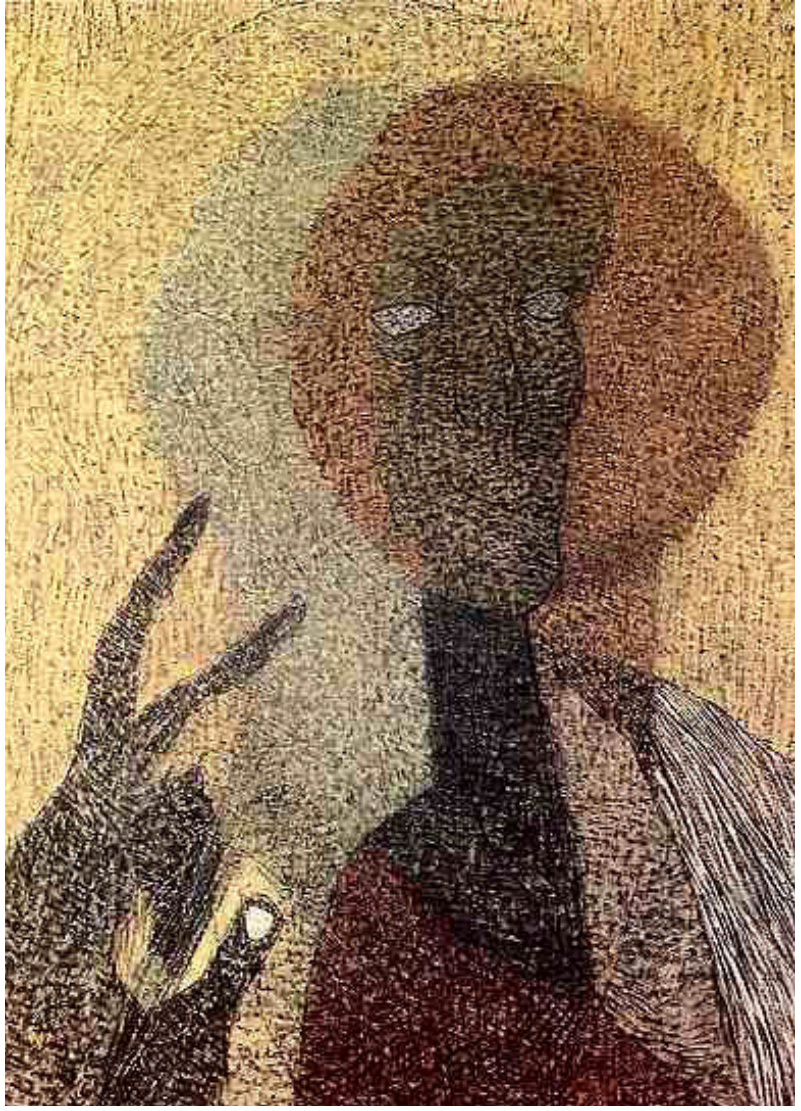
I know hymns that I keep silent.
And when I appear to draw myself up,
my senses within incline themselves:
thus you see me as great,
whereas I am humble.
You can dimly distinguish me
From those kneeling things;
they are like grazing flocks,
and I am the shepherd on the heath-flanked slopes
whom they precede when evening comes.
Then I come behind them,
perceive the muffled sound of the darkened bridges,
and in the vapor of their backs
my return conceals itself.2
“If I do not answer for myself, who will answer for me? But if I answer only for myself — am I still myself?” Pirkei Avot 6. a
My father. Is it through him that everything begins? The history, the stories he tells me in the fanatic apotheosis of a travesty of self, of the world, of history, force open the abyss that separates me each day from the world, from self, from history. A gap, a vacancy, into which Hungary will rush in its entirety.
— You’re confusing them, he tells me. It’s simple: to tell Bucharest from Budapest, think of the fact that Budapest is the union of two cities, on one side Pest, “you see?”, on the other Buda, separated by a river, the Danube, “do you understand?”.
I am still a child, five years old at most. My father travels regularly to Romania, where he buys wood. He goes, he comes. Of his journeys he says, however, never a thing, nothing if not this tireless distinction I must remember “so as not to confuse them” between one capital, Romanian, and the other, Hungarian. In the middle, the Danube, I repeat to myself, alone, striking the water so that its face may be reflected a little longer while his suitcases are already packed.
Between my father and me, a vertiginous distance of age separates us. There exists, I have been told, a Swedish expression that says of children begotten very late that they are “children of the slip.” Indeed, one could find nothing better. I slipped through his hands, no doubt. Before my eyes stands the whole century, a century empty, hollow, which my father survives by the grace of diverse mythologies. My family? He says it comes from Vilnius, or from Riga, he no longer remembers very well. My middle name? That of my grandmother, who is said to have fled the pogroms, Cécile. Cécile, it’s so easy.
Kutya nehéz úgy hazudni ha az ember nem ösmeri az igazságot3.
But let us begin at the beginning. Hungary, I was saying.
Hungary introduced itself into my history as lightning rushes into the flue of a chimney. Nothing and no one awaited me over there: no family, no personal history, no tie, I could barely name a city other than the capital.
First day: Ferihegyi repülétér4, February 25. Costumed as a Parisienne, fine scarf and patent-leather shoes, I have the impression, this first day, that the plane has thrown me like an old parcel into the middle of Siberia. Not the slightest idea of what I am doing here. I have rented a small apartment, on Szinyei Merse Street, from a student. As soon as I arrive, she explains to me that I will always have to take the precaution of locking the three bolts, then the additional grille, handing me a key the size of my suitcase (I make no comment, despite the nagging feeling that the whole building seems to rest on a single beam and that if any object were to survive the general collapse, it would be — let her be reassured — her grille). “I’m counting on your discretion,” she adds, rolling her r’s; it is preferable that this rental remain unknown. An hour later, the young student has definitively left the premises. I go out just long enough to buy a few provisions, but half-paralyzed by the cold, I hurry back at once. In my brief absence, the key and the grille have, in a stroke of brilliance, divorced. Hogy mik vannak, és hogy kell vigyázni5… Discreetly, I call upon my immediate neighbor, Zsuzsa, who, before my delight at seeing her, believes me irrevocably bilingual. In vain will she struggle (with varied curses) with the grille. Discreetly, she in turn calls upon her neighbor, who discreetly inquires of another neighbor, who discreetly, little by little, rounds up the entire building.
— Magyar ? — Nem. Francia vagyok — Nem lep meg6.
From then on, it is in the name of Clemenceau7 that, on bad days, my neighborhood will greet me — that same neighborhood that at the least hard blow will each time be at my side.
The official reason for my coming was a research grant I had obtained for the study of the Jews of Hungary. Why had I chosen a subject so far from my academic specialty? To exorcise my childhood? I believed, however, that there was on that side nothing to redeem. Above all not. I grew up in a cold place, without a name, in which the Holocaust was the room next door. My father built, dismantled committees, associations, foundations; I spent my Wednesdays framing, with thin little strips of wood, unspeakable photographs entrusted by the Yad Vashem Museum.8 My father cursed himself in Yiddish, and I, I wrote his speeches for him, in French — speeches with figures, dates, leagues of which Treblinka was the center. At school, people spoke of my father as if he were my grandfather; with him, indeed, I crossed back through the century, alone. Cécile, it’s not so easy. When I left home, I preferred to think no more of those Jews, of whom I wondered, deep down, whether my father had not hated them. I closed the door.
In the first days, Budapest gives me the impression of a constant déjà-vu, of a city that exudes the nostalgia of a whole continent, of an almost intact Europeanism, still conscious of its culture. I still know nothing of this country, or more exactly, all that I know, all that I have read, will soon be shattered to pieces. In the meantime, I walk a great deal, whether it rains or snows. I have often traveled, stayed for long stretches in countries other than my own. Wherever I was, I would lose my way a few meters from my dwelling. Nothing, neither my wanderings nor my sedentariness, ever overcame this geographical “disquiet.” But here, nothing leads me astray; I walk in the tracks left in the snow by others who turned away from the mirage before me.
Around 8:30 every morning, I set off down Aradi Street, walk a few meters, then turn right onto Szív Street, where I buy bread from a thin grocer who sells, so to speak, nothing or almost nothing. “Szeretlek9”: imperturbable, I announce to this man with round cheeks and a bushy moustache, “szeretlek kenyeret.” I am, however, sure that I am making my request (szeretnék) in the purest Hungarian. By one letter, this man walled up in a voluntary muteness awaits, each morning, my declaration, which at best concerns his bread, at worst his cigarettes. I will understand only at the end of my first stay (that is, a year later!) the obviousness of his smiles…
Then, at Kodály körönd I take the kismetró, yellow, to Oktogon, then walk again along Teréz Boulevard until I reach Dob Street. In the drumming of the excavators, the neighborhood falls in whole sections;10 those edifices I scarcely have time to admire vanish in a cloud of smoke — the house built by the architect Vilmos Freund on Káldy Gyula Street, the dwellings at 11 Holló Street, on Kazinczy Street, on Vasvári Pál Street, on Nagymező Street, a few meters from the “Broadway of Pest,” on Király Street, and so many others still. One must walk faster than the excavators, faster than time and the disappearances.
During the day, I go to the universities with which I collaborate, then begin my interviews. In an innocent blindness, I meet academics, witnesses, former dissidents, philosophers, Jews, half-Jews, converts of Jewish origin, and what else do I know. While my organization keeps improving with time and a better knowledge of the city, my capacity to understand, on the other hand, grows darker each day a little more. Everything, at first sight, partakes of the most paroxysmal contradiction — two Hungarians, three opinions (at least).
My first appointment is set for Moszkva tér at six o’clock. It is already almost night; never has this square seemed so Muscovite to me, and how to tell one Hungarian from another, a keservit!11 I have never met this journalist with whom I so insisted in order to obtain an interview.
— Hol van a fül12?
A sardonic smile (I am used to it), and no answer from those I address with, nonetheless, the frankest despair. It will occur to no one that with an additional ke, I am looking for a telephone booth.13 The journalist, fortunately, recognizes me, for his part, from a thousand leagues away. Once at his place, I have not the time to take out my recorder before he is already explaining to me that he belongs to the Lubavitch community, but that he is liberal and on this subject supports the woman rabbi, but that, let us be precise, he is secular. Discouraged, I ask no question.
A few days later, it is in Debrecen that I have an appointment with Horváth János, the “President” of the city’s Jewish community. I am accompanied by the director of the Debrecen Summer University, who says he knows him well: “barátom14,” he hurls at me about him, as if my tongue had slipped yet again. He explains to me that Horváth is a name very widespread among the Jews who, as early as the nineteenth century, Magyarized their names. I wonder, moreover, why my own name has so German a ring, with no correspondence whatsoever to the Latvian or Lithuanian language. However, without further reflection, I take out my notebook and write: Horváth.
At the beginning of the interview, the director translates his friend’s words for me with the greatest care, explains to me with patience the conferences the President of this slender community organizes, the hours of the synagogue — the recently built one, the old one being today too large, too vast for the absent. But quickly, their dialogue accelerates, and I cling to the scraps I understand in extremis, just before the conversation closes definitively:
— Nem zsidó ? Tényleg ?: asks the University director. — Nem15: answers, then, Horváth János.
It is thus that we part, with many thanks, all the same. E furcsa élet villanását16
Night fallen, I cannot explain my joy at returning to my Szinyei Merse and my grille. Zsuzsa has set on my windowsill a cake, delicious as hell. Zsuzsa was, in another life, an agricultural engineer. Since her retirement, she has rehabilitated herself, of her own accord, in the study of chakras and other mystical metaphors. She heals, cures or not, in a cloud of incense and an “Indian” music that resonates meagerly from a tape recorder, so to speak, prehistoric. Zsuzsa watches over me, in her way.
The days settle into the snow and the silence of Budapest, the interviews follow one another. I take out my notebook, I note, I record each contradiction, each antagonism that the settings of the immense existence harbor in this Hungary I am discovering. I grow accustomed to it, and cease to take umbrage as if someone were mocking the cracked wall against which I lean. With time, my collection grows, of sounds, of smells, of words, of lights. And I, I grow. Little by little, I no longer quite know how I can still think of leaving, for France or elsewhere. Mentem mert vitt a járda a tág Andrássy-úton,/ Lassan mellém húzódtak, s múltak a barna házak, / Nem is sétáltam; mentem, de nem tehettem róla17.
Two months later, I am nonetheless at Charles de Gaulle Airport. I am wearing, for that matter, one shoe too many or someone else’s suitcase, so much is everything suddenly askew — me, my usual costume, and the spectacle that presents itself to my eyes and that I no longer recognize. I do not, however, take the time to stop very long in Paris, just long enough to send off a few administrative requests: the death certificate of the said Cécile and the naturalization of the worthy grandfather who, according to the family’s mythological misadventures, disappeared on the Russian front.
Return to Szinyei Merse: the weather has softened. Zsuzsa and my personal tribe of anti-Clemenceaus still greet me with a courteous irony, my grocer, arms crossed, still awaits, at the same hours, my morning “I love you.” Life has settled here, and the beam holds my building with all its miraculous force. With time and the methodology of my daily route, I stop at stalls I know, greet some I have interviewed, and sit down every other day in a small restaurant that serves five settings at most, at the place of the one I will call, for the occasion, Balázs Imre, whom the neighborhood hails under the eponym of “Bácsi18.” He comes from Nagyvárad.19 Most often, he speaks to me of Europe, of its importance, of the fact that “we” are not entering the European Union, but that “we” never left it. To his Romanian wife and his children, he speaks only Hungarian. This last day, I explain to him that I am leaving in a few weeks, that I am leaving “the country.” He asks me nothing, not even whether I am coming back. He hands me a dish “from over there” out of which I see a white cream overflowing, which my stomach, shaken by appalling spasms after so many fried and breaded things, gives up observing. He, his wife, and their young son, whose Mediterranean beauty contrasts so sharply with that of his parents, sit down together facing me, and watch me eat. It is of an unthinkable embarrassment… Between two laborious mouthfuls, Bácsi abruptly warns me that he is going to recount what his wife and his son are going to hear for the first time. What he witnessed, “over there,” at Nagyvárad. Indeed, his parents and he lived a few meters from the scene, he insists. They lodged at the edge of the ghetto, built in all haste by the Hungarian authorities, and whose evacuation to the camps of Transnistria, then of Auschwitz, was as brief as it was efficient. Several times he rises to mime for me the distance, the distance that still separates him from the disappearance, of the others, of his own. He recounts, slowly, executing several times the same obsessive movement. He speaks, a long while. He walks painfully from the door of his restaurant to the kitchen, repeats a gesture, the one that still designates the distance, the same distance that draws him away from his own who disappear into the far, before his windows. The marriage of “Bácsi’s” mother to a non-Jew had granted them a little respite before the flight. But before his child’s eyes, his cousins, his aunts, his grandfather, his friends draw away without end; each day they watch them, mute, fade into nothingness. His son is as pale as the snow. It is thus, while I tremble beneath the table, that he discovers his past, his Jewishness, and his father who, since even before his birth, repeated, repeated between the cream and the cheese, the scene of the ultimate departure.
This time I have neither recorder nor notebook, only the common pain.
I could not bring myself to leave everything behind; I left in Budapest much of my belongings, my clothes, my books. I will come back.
Under my door in Paris, I recognize the postmark of the French administration. Without haste and without surprise, I read that Cécile — no, it’s not easy — never bore that first name. Up to her gravestone, her name was Iszka. As for my grandfather, no trace or almost, if not his marriage certificate. Neither one nor the other is from Riga or Vilnius. From the little I gather, their original name was Tabakine. So this is what I am called: Iszka Tabakine. I hold this meager letter against me. So my father would have used the same obsessive chimeras to spare me the incommensurable debt. You, who nonetheless cried out at the top of your voice the imminence of survival, you whom I followed, haltingly, into ever more numerous conferences where I saw you, tottering, teach the Shoah, and where, for each one, I was your pen, your eyes. I am ten years old, I am eleven, I am twelve; each year more photographs than I could bear my whole life engrave themselves upon a body that time renders ever lighter, ever less weighted upon this earth. So this is how you raised me? Under the open sky. Tengerem ölelé karok / meleg homályú, lágy világa. / Egem az ésszel fölfogott / emberiség világossága…20. Then, eyes closed, I rise, I lift myself and wheel about, alive, in spite of everything, with you, my Father. It suffices to close that life, and to open Iszka’s, then I take up Aradi Street again, turn right, take Szív Street21 “you see?”, one heart for another, and I far prefer the heart of the living, “do you understand?”. By one letter, the one that makes of one word another word, I could have been the “spark,” Lenin’s first newspaper too, by one letter; I could have been born under another star and built myself under other appearances, but would I then have been, in that fullness, upright? From my father to my people: a Jew.
Those who fomented a possible Europe in the full Stalinist period while another Europe sneered at a communism with a “human” face, those who, at a café table, while Hungary had already joined the European Union, recounted to me a present of which I was their witness — the witness of a cunning devil and of that polymorphous god disputing precedence in their conscience, which neither contradictions nor fractures frightened — gave me back my debt, without fear of the heaven beneath which from now on I can walk, in this name I bear hidden…
History marches in step; Imre Kertész spoke of the disillusion in the West which he, like all of Eastern Europe, escaped; my father is no doubt not an isolated case. Their suitcases full of treasures, of unpublished writings, of signal testimonies, I will go, wandering, to address myself to institutions so that these may be published, before they shatter in oblivion. No, I am not speaking of the Holocaust, I will insist, that is not my purpose, not here, not now. It is only about the living, those still present or those who, through their writings, never cease to be reborn — no, Miklós Radnóti is neither this nor that; to the very threshold he will die a Hungarian poet. All the institutions will close their doors to me.
I went to Hungary in quest neither of a past nor of an identity which, forged late, would have been as deceptive as derisory. I can do nothing against what could not be transmitted to me, not even a little hope, intrinsically tied, in the end, to every form of inheritance. Antisemitism, the Final Solution, are the cursed river of this Europe, a river one does not cross. Those who crossed my path, these Hungarian Jews of manifold faces, built me a footbridge, to the measure of my steps, so that I might return from time to time to that Europe, the one that saw the birth of a Freud as of a Kafka, in all the complexion of their own inheritance and the considerable diversity of their cultural, intellectual aspirations, in struggle against the darkness. This Europe of long ago, from which my trembling hands still clasp a few verses of Rilke, a few scattered lines of Musil, will be no more. Alone in an ocean of flat screens, of televisions, of noises, alone behind this world with its grimacing face, the echo of my own then comes back to me, those whom my father indistinctly evoked. What they had dreamed, built, contrived, elaborated, thought down to the very silences, and whose immensity it is time, today, to restore.
My poor father, a bisel mentsh22, lost in History, whose steps could never make their way toward the engulfed past of his own, very probably must have passed through Hungary to set down there a pebble, just in case. In case I should come looking for him…
And I came looking for him.
Notes
The abridgment (editor’s note).↩︎
All those whose hands…. R. M. Rilke↩︎
“It is devilishly difficult to lie when one does not know the truth at all.” Incipit of Péter Esterházy’s work Harmonia Caelestis (translation by Joëlle Dufeuilly and Agnès Járfás).↩︎
Budapest Airport.↩︎
An old-fashioned, popular expression constructed in bad Hungarian, which would mean literally: “all the things that happen and how one must be careful.”↩︎
“— Hungarian? — No. I’m French. — That doesn’t surprise me.”↩︎
Clemenceau being, for the Hungarians, the figure of the basest betrayal, having taken part in and encouraged the signing of the Treaty of Trianon (1920), which cost Hungary the loss of two-thirds of its territory.↩︎
Holocaust Museum (Jerusalem).↩︎
Szeretlek means “I love you,” as opposed to “szeretnék: I would like.”↩︎
The Erzsébetváros district, the old Jewish quarter of Budapest.↩︎
“Damn it all!”↩︎
“Where is the ear?” (Fül: ear)↩︎
Fülke: booth (telephone).↩︎
“My friend.”↩︎
“— You’re not Jewish? Really? — No.”↩︎
“Instant made of lightning in this life of strangeness,” Ady Endre, Egyre hosszabb napok (Days longer each day, translation by Armand Robin).↩︎
“I moved forward, while the sidewalk pushed me toward the wide Andrássy Boulevard / Slowly, russet-brown edifices brushed past me, then vanished / I was not strolling, I moved forward, without the faculty of preventing myself,” Szép Ernő, Magányos éjszakai csavargás.↩︎
“Bácsi” is a term that means both “Uncle” and “Mister”; it designates a man for whom one feels affection.↩︎
Oradea (Transylvania — Romania), but which the Hungarian community still designates under the Hungarian appellation dating from the Empire.↩︎
“My sea: warm, gray penumbra / of arms open to embrace. / My sky: the well-understood clarity / of what is called humanity,” József Attila, Már régesrég… (I discovered this long ago:, translation by Georges Kassai.)↩︎
Szív means “heart.”↩︎
Little man (in Yiddish).↩︎