The revelation, in the public sphere, of the scale of the Stalinist crimes has been partly grounded in the publication of “books of victims” of Stalinist repression — long lists of names accompanied by a few pieces of information. These lists are for the most part integrated into databases accessible on the internet, in particular on the site of the Memorial association, a pioneer in carrying out such work, from the end of the 1980s. This database is named “The Victims of Political Terror in the USSR.” It was often a matter of restoring a date and a place of death to hundreds of thousands of people who were shot, in particular in 1937 and 1938: “To immortalize the victims of repression is an idea that united Memorial in 1988. Three directions of work were then defined: the establishment and publication of the names of all the victims, the discovery of the burial places of those killed, the construction of memorials.”1 It is thus a matter of establishing new monuments to the dead, in the form of works, of sites, before there were sometimes built monuments to the dead in more traditional forms. The latter are still quite discreet.2
Recently, another site was opened by the association “Historical Memory” (Историческая память), recalling by its form the site of the Memorial association. It is likewise a list, not of “the victims of political terror in the USSR,” but of the “victims of nationalist terror in the western regions of the USSR.”3 The grounds of this other monument to the dead are also a denunciation of the silences that dominated Soviet history: “For many years, the history of the activity of the nationalist formations on the territory of the western regions of the Soviet Union was a forbidden subject of research. The existence of clandestine, armed, mass anti-Soviet actions in the Baltic republics, in western Ukraine, and in western Belorussia did not fit the Procrustean bed of the official ideology, founded on the unity of the Soviet peoples and the progressive character of the Soviet regime.”4
Such an initiative would thus be only one element of the revelation of a complex Soviet history, of its violence and its brutality. The authors claim a break with the Soviet heritage of silence and secrecy that led to the occultation of numerous pages of the history of the USSR, but also to the distortion of it. They thus situate themselves in the perspective of the other memorials revealing Soviet history, but also its very numerous victims. However, the putting into perspective of these memorials gives one pause. There is an implicit equivalence drawn between these new monuments to the dead, the latter constituting moreover a response to those that are today built in the Ukrainian villages, in particular in the West, in honor of the victims who were members of the Ukrainian Insurgent Army (UPA) — here heroes of the new Ukraine, there agents of terror. These latter monuments are often built next to those that celebrate the soldiers of the Red Army, killed in combat during the Second World War, to whom the former were opposed. To be called a banderist before 1991, after the name of Bandera, a Ukrainian politician, founder of the Ukrainian Insurgent Army (UPA), who first allied himself with the Nazis against the Soviets, then turned against the former (and was arrested; he was assassinated), was heavy with meaning: it was to be on the side of the traitors to the Soviet and Ukrainian fatherland, a collaborator with Nazi Germany. Yet, today, Bandera has become for some the symbol of the struggle for the independence of Ukraine. These monuments are often built on the initiative of the veterans of the Ukrainian Insurgent Army, who ask to benefit from the status of “veterans” (former combatants) on the same footing as the veterans of the Red Army.5
It is true that, as soon as one enters into the detail of these memorial sites, the difference leaps immediately to the eye. The database of the “victims of political terror” contains 2.7 million names; the database of the “victims of nationalist terror,” 15,696 (including wounded. There are 12,055 killed). On the first site, which reproduces the various repressive acts concerning each victim, one discovers the terribly administrative nature of the condemnation to death: “Plebinskij, Tadeouch Iosifovitch, born in 1880, in Poland, in Warsaw. Sentenced: Commission of the NKVD of the USSR and Procurator of the USSR, N° 1137, 11 May 1938, article 5 of the penal code of the Russian Federation. Sentence: Death penalty. Shot on 27 June 1938. Place of burial: Tula region; Tesnitskaia camps. Rehabilitated on 8 June 1989.”
On the second site, the image is altogether different, that of actions which are presented as mere banditry by the Soviet authorities. The site thus takes up the formulations of the administrative documents: “On 9 December 1945, in the village of Ladino, Veprovskaia region, unknown bandits killed the citizen Jidkovitcha and his wife. In the village of Medyna, they killed the citizen Zosia Avgustene. We have taken measures to capture the murderers.” A guerrilla killing, which nothing a priori distinguishes from a sordid murder, all the more so as the Soviet vocabulary that qualifies these nationalist combatants tends permanently to reduce them to mere “bandits,” a term which, in Russian, it is true, places more emphasis on the idea of organized gangs.
Two events of a very different nature, but which, by an almost explicit will of the authors of the second, are placed on the same plane of a rewriting of history dealing with a past that was indeed for a very long time occulted. In building these monuments, even if they be virtual, one suggests forms of equivalence between historically contemporary acts of violence that affected partially identical territories.
We thus put these two forms of memorials into perspective in order to illustrate partially the complexity of the historians’ approaches bearing on the Europe of the 20th century, today.
This complexity is in particular the direct consequence of the political upheavals of the last twenty years. It is not rare that such upheavals modify historiographical perspectives. This is all the more true when this upheaval does not have for simple consequence a change of regime, but a recomposition of the national spaces, accompanied, in particular, by the rebirth or even the birth of new states. In this respect, to contribute today to writing the history of the USSR and of central and eastern Europe in the 20th century is subject to an interweaving of stakes and tensions that make this task particularly interesting, so much do they provoke interrogations about the imposed frameworks within which every historian moves — national, political, archival frameworks, the heritages of the previous writings of history, etc.
Today, we are indeed faced with a rewriting of the history of Europe. It is due neither to an upended chronology nor to essential events for this writing suddenly revealed (even if, in the case of the Soviet space, certain essential moments are, if not discovered, at any rate considerably reevaluated: the famine of 1933 is one example, the Great Terror of 1937–38 another). It is due much more to a profound reevaluation of the interweaving of the political systems, of the insertion of the social actors into worlds with shifting and shattered borders — territorial borders of course, but also political, social borders, moral borders between what one might call “historical good and evil,” that is to say what history has been in the habit of considering as good and as evil.
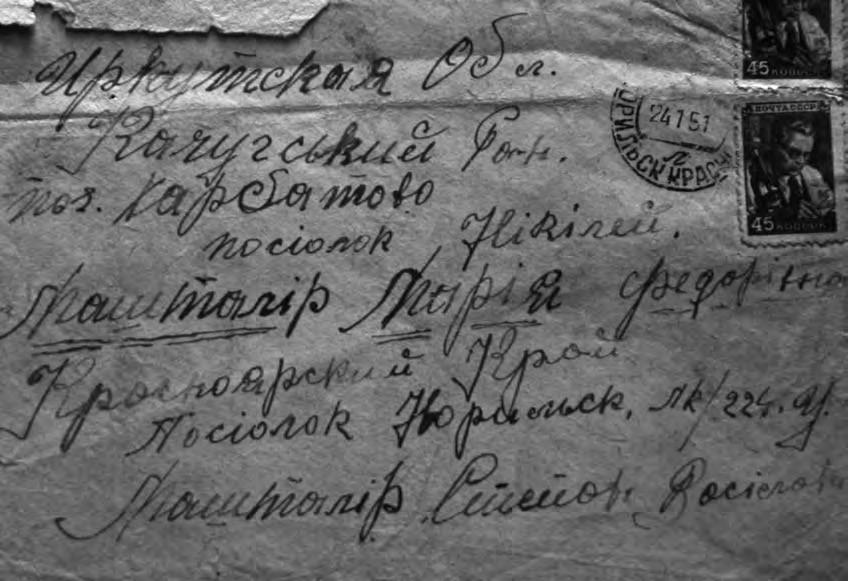
European history, far from unifying with the enlargement of the European Union, has tended to fragment into a multitude of national histories that draw their sources not only from an ancient history, which seeks to recover a past independence and power, but also from the history of the 20th century and the trains of violence undergone by one part of the populations residing on the present national territories, but also carried out by another part (or even, at times, the same one).
So it is with the history of the forced displacements that mark the whole of the European 20th century. They found, in central and eastern Europe, national histories, to which the various memorials or museums bear witness — very selective national histories that scarcely insert these processes into the whole of European history and of the history of the USSR in particular, nor into the history of the generalized violence that marks the twentieth century. The deportee thus becomes, along with the political prisoner, emblematic of the violence undergone by these populations and then constitutes one of the figures of victims in the history of numerous countries of central and eastern Europe. Whereas the Shoah is perceived, in the mid-1960s, as a collective violence that belongs to the history of humanity — a violence that is perceived as a whole, even if historians today analyze all its components — the deportations carried out by the Stalinist USSR are fragmented into as many histories as there are countries or populations that underwent this violence, and they scarcely even form part of European history.
This tendency is reinforced, while taking on a particular form, by the essential place of the individual and of the witness in the rewriting under way of the history of these territories and of these populations. This place considerably modifies the perspective, the evaluation that one can make, history itself. It permits without doubt a particularly fruitful junction between social and political history, history of political practice and history of social behaviors. It nonetheless creates a particularly polarized gaze, between those who are the actors and those who undergo, whatever the personal engagements.
The social sciences in general, history in particular, are thus very largely confronted with the account of those who lived it. But, unlike “the era of the witness,” which privileged the testimony bearing on a very particular moment of violence, the account of the witnesses of the Soviet world and of its space of influence is that of the lived experience of a long period, more than of an event. The difference is all the greater in that this “era of the witness” bore on the survivors of the Shoah, the extermination of the Jews, whose nature lends itself to no discussion, or doubt. The situation is altogether different in the case we observe, where the place of “evil” and of “good” is profoundly reformulated precisely through the discourse of the witness. Of course the accounts of trials, of arrests, and of camps are very largely present. But the accounts of an entire period are also there, the better to show the upheaval of the lives that traversed this history — an upheaval that is not attached to the sole moment of the violence, but to the history of the 20th century.
Sources that orient the gaze
This very particular, individualistic rewriting arises from several aspects.
The importance of testimony in the writing of history orients the historian’s analysis toward the gaze of the one who lives the event and thus contextualizes it only through what is perceptible or remembered by the person — much narrower than general political history. It is true that the sources issuing from these political systems, and above all from the Soviet system, whether in the USSR itself, or in central and eastern Europe after the Second World War, push toward such a writing and such a vision of history. The accumulation of files bearing on individuals, the necessary “humanization” of the terrifying figures of the victims, arouse in the historian the desire to develop an approach that privileges the person. The personal diary is confronted with the informer’s report that gives to be seen slices of life written in a codified administrative language. The police file gathers these slices of life by giving them a coherence that the repressive organs seek to orient toward a criminal framework, should the occasion arise. The long letters sent to the judicial organs, to the procuracy, in which the condemned proclaim their innocence, constitute another source of life stories. The contemporary account, finally, completes this multitude of sources, which lead to placing biographies at the heart of the historian’s inquiry.
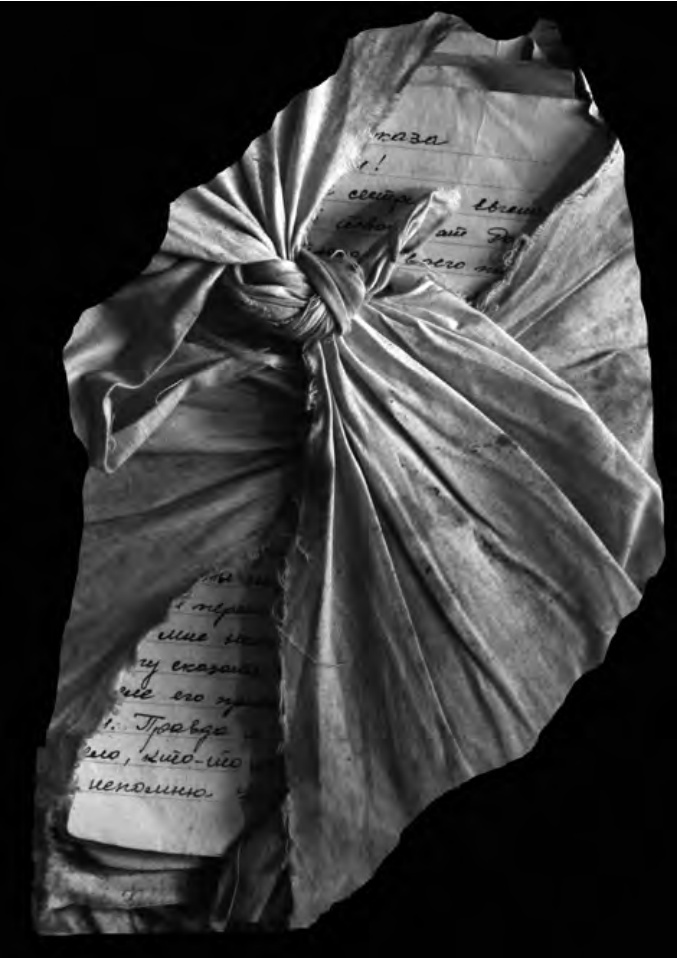
We evoke here two projects, two approaches, which have tended to seek to attenuate the tensions evoked above, the contradictions that the writing of national accounts reveals, the problems that can arise when history is made on the basis of memorial accounts. The first project, which we coordinated, is titled Sound Archives — European Memories of the Gulag, a writing of a history of the deportations from central and eastern Europe toward the USSR, between 1939 and 1953. The second, titled Virtual Museum of the Gulag, was conducted by the Memorial association of Saint Petersburg and consisted in constructing a virtual museum as the sum of the numerous local museums present in many localities on the current Russian territory, as well as in the states of central and eastern Europe.
Virtual museum — European memories of the Gulag
The experiment we conducted, within the framework of a research project titled Sound Archives — European Memories of the Gulag, had, among other objectives, that of combining singular histories and collective experiences. Another objective was to avoid inserting these particular experiences exclusively into the new national historical accounts, which found the legitimacy of the states of central and eastern Europe, by trying to arrive at a more general reflection.
At the heart of our approach, the gathering of interviews with former deportees to the USSR from territories situated to the west of the Soviet border of 1939 (just before the Molotov-Ribbentrop pact) and confined in the camps dependent on the Gulag, the central administration of the camps, or else assigned to residence in the Siberian villages, in the Far North, or even in Central Asia, without, however, being subjected to the regime of the camps.
We sought to obtain accounts of an entire life and not only of the very moment of arrest and deportation, for it mattered to us to grasp each witness in his singularity, whereas the very moments of violence are often moments that efface this singularity. We wished also to understand better the place of such violence in the life trajectories of a person who underwent it, all the more so as the majority of the testimonies we gathered came from witnesses who were children at the time of their arrest and their deportation.
This emphasis placed on oral testimony, which we wished to be present right to the end of this work — since the elaboration of a site, museum.gulagmemories.eu, was in particular intended to leave the voice its full place — does not mean that the archival document is absent, of course. It takes, however, a particular place, that of the bureaucratic writing of the act of deportation, or else of the managerial writing of the economic use of the deportee. These archives group people together by the mere fact of undergoing this violence. But the grouping is ephemeral, and most often holds to a few particular moments, which do not dominate the deportee’s life once his settlement in a village, a collective forestry enterprise, an industry, has been accomplished.
The project was developed by an international team, indispensable for breaking with histories torn apart among various countries, and permitting direct access to the witnesses. 13 researchers, mastering 8 different languages of the countries of central and eastern Europe, carried out 170 interviews in 17 countries (Estonia, Lithuania, Latvia, Hungary, Romania, Bulgaria, Poland, Czechia, Slovakia, Germany, France, Great Britain, Italy, Belarus, Ukraine, Russia — Siberia and the Far North, Kazakhstan) with people who had been deported between 1939 and 1953 from the territories situated to the west of the USSR border of 1939. Russia and Kazakhstan figure there, because we also went in search of those who had stayed where they were deported. France, Great Britain, and Italy figure there too, because we gathered interviews with some who, after the Second World War, decided not to return or could not return to where they lived before the war. These are essentially Jews who had lost all their family, exterminated by the Nazis, and who, for some, bore the full brunt of a postwar antisemitism, in particular in Poland.
Jewish trajectories
One of the objectives of our research and of our collection was to question ourselves about the existence of a European experience of deportation, one that would not be simply the sum of national histories. The accounts of the witnesses of Jewish origin, who currently live in many countries of Europe, were a particularly rich and important source, for the study of the history of the deportation of the Baltic and Polish Jews offers the possibility of carrying out a transnational analysis of the deportation to the USSR.
The Polish and Baltic Jews were arrested or deported to the USSR between 1940 and 1941 following the signing of the Ribbentrop and Molotov pact, and experienced completely different conditions of return.
The Polish Jews were deported principally in the course of two operations in April and June 1940. In April, the deportations concerned above all the representatives of the defeated Polish state and the members of the propertied classes, whereas in June 1940, the targeted category was that of the refugees, for which the Soviets created the term “special displaced refugees” (specpereselentsy-bežency).
The persons falling into this category were those who had fled western Poland, occupied by the Germans, but who had then refused to take Soviet citizenship and had made a request to the Soviet-German Transfer Commission to return home, to western Poland.
The last deportation, in June 1941, no longer concerned only the eastern territories of Poland, but also the three Baltic countries and Moldavia, and had as its goal to “cleanse” these territories of anti-Soviet, criminal, and “socially dangerous” elements.
By this decree, the Jews who had property, or who had been active in a party, a movement, a cultural or political organization, were arrested and sentenced to forced labor in the camps of the Gulag, while their families were deported to Siberia. They were therefore not deported because they were Jews, but because they fell under a social status or a function that rendered them suspect in the eyes of the Soviet authorities.
The German invasion of the USSR modified the attitude of the Soviets toward the Polish government in exile in London and opened a brief period of bilateral cooperation that translated into the possibility for the Poles to take charge of their nationals on the territory of the USSR and to organize their repatriation.
On 12 August 1941, a decree of the Presidium of the Supreme Soviet of the USSR ordered the liberation of all “Polish citizens currently found on Soviet territory either in the capacity of prisoners of war or on other grounds.” The amnestied received a certificate permitting them to circulate freely on Soviet soil, and the great majority of them headed toward Central Asia to join the Anders Army6 or else because the south was the only possible way out. Via Iran, many hoped thus to reach Palestine.
Of the 199,865 persons transferred within the framework of the departure of the Anders Army, 3% were made up of members of the Jewish minority. The majority of the amnestied of Jewish origin did not manage to be recruited into this army or did not even try to be selected, and remained living in Central Asia until the accords of 1945. It is thanks to these accords between the provisional government of national union of the Republic of Poland and the USSR, for the evacuation of the individuals of Polish and Jewish ethnic nationality deported in 1940–1941, that the returns of the “special displaced refugees” effectively began.
The persons originally from the eastern part of Poland, henceforth annexed by the Soviets, as well as the Polish Jews living in Wilno, before it became Lithuanian in 1939, were not authorized to return to their territories of origin; only those originally from the central and western part, which had just been liberated from the Nazi occupier, were authorized.
If, at first, these persons returned to Poland, a large part of them left the country following the Kielce pogrom of 4 July 19467: 250,000 Jews left Poland between 1946 and 1948 for the “DP” (Displaced Persons) camps in Germany, Austria, and Italy,8 in order to reach Palestine. Others leave Poland in 1968 during the antisemitic campaign. The Baltic peoples, of every origin, deported in 1940–1941, were the object of no repatriation accord and had to wait for the death of Stalin and the amnesties that followed, from the second half of the 1950s and until the beginning of the sixties, in order to be able to return home.
These different conditions of return give rise to a difference not only in the individual trajectories, but also in the modalities of memorialization of this experience.
The Polish Jews could thus choose between staying in Poland (despite the unstable, sometimes hostile or even dangerous situation of the country in the immediate postwar period) or else joining the camps for displaced persons, from which they emigrated to Palestine, the United States, or the various countries of Europe. They could thus settle in the various European capitals or in Palestine, they could choose the course of their studies and decide whether or not to live in the Jewish tradition.9
The Baltic Jews remained stuck in Siberia for almost 15 years; the majority of the children completed their studies there, they could only with difficulty choose their university course because of their status as former deportees. Some managed to keep some Jewish tradition with immense difficulties, but most underwent a slow de-Judaization and progressively adopted a Soviet way of life.10
If for both populations, Polish and Baltic, the political context in which they found themselves played a major role in the transmission of their experience of deportation to the USSR, the Poles found themselves confronted with very different situations depending on the countries where they chose (more or less voluntarily) to live and depending on the political and memorial evolutions of the latter, whereas the Baltic peoples had no choice except that of silence (in deportation and upon return), thus bearing the double stigma: that of former deportee and that of Jew. It is only from the middle of the 1970s that some of these latter could leave the USSR and emigrate to the United States, Canada, and Israel; others had to wait until 1991.
The virtual museum, Sound Archives — European Memories of the Gulag, offers, in its very conception, the diversity of these trajectories to be seen. It places first each witness in geographic space, retracing his geographic itinerary. It presents a set of “rooms” devoted to the persons who lived these experiences, so many diverse cases; it offers finally, through thematic rooms, to understand also the communities of experiences crossed with the singularity of the trajectories.
The virtual museum of the Gulag
Let us evoke a second project which, it seems to us, has partially the same ambition as the Sound Archives — European Memories of the Gulag, even if it is not affirmed as such, and whose originality offers another way of doing the history of Stalinism by articulating it with a truly European history. It is the project “Virtual Museum of the Gulag,” developed by the center for scientific information of the Memorial association of Saint Petersburg, of which Irina Flige is the director. This virtual museum sets out to exhibit, in a neutral fashion — that is to say, one that takes into account the multiplicity of the museographic accounts — what the multiple museums of the Gulag, dispersed over the territory of the former USSR but also over the territories of the states that underwent Stalinist domination, conserve and present. The diversity of the experiences, the multiplicity of the repressive practices, the multiplicity of the interpretations are here presented without commentary, offering to the one who moves through this virtual museum the possibility of constructing for himself a complex gaze and of integrating the diverse or even contradictory approaches.
The authors of this museum underscore the absence, in contemporary Russia, of a national museum of the Gulag, noting that “The memory of the communist terror has not constituted itself into a homogeneous and uniform whole of national memory; it is still a set of fragmentary memories of local events, not connected by a common conceptual entity. It is precisely such a situation of memory that the collections of the museums and the exhibition projects demonstrate.”11 The virtual museum of the Gulag thus seeks to gather a set of individual or collective initiatives that have led to the creation of local museums.
Behind this wish lies the concern, essential, not to affirm one and only one history of the Gulag. During a conference held in December 2011, Nikita Okhotin, of the Memorial association of Moscow, thus affirmed that he was hostile to the opening of an official museum of the Gulag, which would gather in a single place the thus-unified history of Stalinist repression. He thus underscored that the Gulag was characterized by the immensity of the territory it covered, the multiplicity of the conditions of life, of the populations that were confined there. He feared that a centralized, officialized memorialization would lead to destroying the very essence of what the Gulag was — tentacular, omnipresent, multiple, but also dispersed, sometimes invisible, masked.
The virtual museum of the Gulag can appear as a response, a particularly interesting one, to this wish; the multiplicity of the places, but also of the representations, of the interpretations, is thus preserved. The placing in parallel of the objects around themes combines diversity and unicity, complexity and simplicity. No doubt the conflicts of history or of memory do not appear as polarized as they sometimes are.
To show the polarization is not the object of this museum, for it bears witness on the contrary to certain continuums, to a polarization that is not really one.
This is another way of doing the history of the Gulag than the one we chose. Another way, but the objective seems close: that of leaving room for singularity without thereby denying the community of experience. That of admitting contradictory histories, histories that cover immense territories, that are not reduced to national histories.
We, for our part, privileged the speech of those who lived through the deportations, situating them in a broad but determined geographic territory, and thus excluding many of those who underwent these displacements but who resided in the pre-1939 USSR.
Notes
The site http://www.http://gulagmuseum.org presents a great number of them.↩︎
Ibidem.↩︎
Anna Colin Lebedev, “The Ukrainian Union of Afghanistan War Veterans: Composing with the Memory of an Illegitimate Soviet War in Contemporary Ukraine.” Paper presented at the 6th annual research seminar on contemporary Ukraine, University of Ottawa, October 2010.↩︎
First quartered in various camps in Central Asia, above all in Kazakhstan and Uzbekistan, the Polish army of General Anders managed during the summer of 1942 to leave the Soviet Union via Iran, whence it was able to reach the western front and fight alongside the Anglo-Americans.↩︎
J. T. Gross, Fear: Anti-Semitism in Poland after Auschwitz: An Essay in Historical Interpretation, Random House, New York, 2006, pp. 81–117.↩︎
Cf. Y. Litvak, “Polish-Jewish Refugees Repatriated from the Soviet Union at the End of the Second World War and Afterwards,” in N. Davies and A. Polonsky (eds.), Jews in Eastern Poland and the USSR, New York, 1991, pp. 230–238.↩︎
Testimonies of Micheline Herch (museum.gulagmemories.eu/fr/salle/micheline-herc), Joseph Kirszenberg, Sanlim Rosemberg, Teodor Shanin (museum.gulagmemories.eu/fr/salle/teodor-shanin), Henry Welch (museum.gulagmemories.eu/fr/salle/henry-welch). Sound Archives of the Europe of the Gulag, CERCEC, Paris, 2008–2011.↩︎
Testimonies of Mikhaïl Apt, Anna Barkauskiene, Diāna Kratiša (http://museum.gulagmemories.eu/fr/salle/diana-kratisa), David Jozefovich, Abram Lėšč (http://museum.gulagmemories.eu/fr/salle/abram-lesc), Rafails Rozentāl (http://museum.gulagmemories.eu/fr/salle/rafails-rozentals), Jakobs Shats (http://museum.gulagmemories.eu/fr/salle/jacow-shats), Iser Šliomovičius (http://museum.gulagmemories.eu/fr/salle/iser-sliomovicius), Ibid.↩︎
http://gulagmuseum.org/showObject.do?object=3315723&language=1↩︎