Central Europe (Mitteleuropa) is at once a geographical reality and a cultural sphere: at the beginning of the twentieth century, it is the German language and German culture that unify Germany and the Austro-Hungarian Empire. During the period running from the end of the nineteenth century until the rise of Nazism, the Ashkenazi community of German culture knew an exceptional cultural flowering, a golden age comparable to the Judeo-Arabic twelfth century in Spain. This Judeo-German culture, the product of a spiritual synthesis unique of its kind, gave the world Albert Einstein and Sigmund Freud, Franz Kafka and Karl Kraus, Arnold Schönberg and Gustav Mahler, Edmund Husserl and Theodor Adorno, Georg Lukács and Hannah Arendt, Ernst Bloch and Walter Benjamin. It appears to us today like a continent submerged beneath the sea, an immense field of ruins. Destroyed by Nazi barbarism, it survived only in exile, dispersed, and its last representatives, Hans Mayer, Leo Löwenthal, have only just died out, like the final sparks of an immense fire of the spirit. It nonetheless left its imprint on the culture of the twentieth century, in what it produced of the most innovative and richest, in literature, the arts, science, philosophy.
The emancipation of the Jews in Central Europe, over the course of the nineteenth century, was — in comparison with France or England — late and incomplete. Antisemitic trials still took place in Hungary and Czechoslovakia at the turn of the twentieth century. Nevertheless, the contrast with the condition of the Jews in Eastern Europe — that is, in the Tsarist Empire — is striking: no more ghettos, no pogroms or zones of exclusion. From this point of view, Central Europe occupies an intermediate place in the geography of Judaism on the continent, midway between the effective emancipation and integration of Western Europe and the heavy legal discriminations (aggravated by murderous persecutions) of Eastern Europe.
What immediately distinguishes the Jewish culture of Central Europe from the Yiddishland of the East is, of course, language: in Berlin, Vienna, Budapest, and Prague, the Jews speak German. In the cities on the periphery of the Austro-Hungarian Empire, where Hungarian or Czech is spoken, they are even the representatives par excellence of German culture. This difference is the result of a process of progressive assimilation over the course of the nineteenth century, which led the majority of Jews to adopt the German language and German manners — including the Western jacket (Jacke), the probable origin of the slightly ironic term Yekke with which the Jews of Warsaw or Vilna designated them.
Assimilated and marginalized The principal characteristic of the Jewish communities of German culture is the desire for assimilation. A letter written in 1916 by the Jewish industrialist Walther Rathenau shows just how far this attitude could go: “I have and I know no blood other than German, no other ethnicity, no other people than the German. If I am expelled from my German soil, I would continue to be German, and nothing will change that… My ancestors and I have nourished ourselves on German soil and the German spirit… and we have had no thought that was not for Germany and German…” The most consistent assimilationist current was represented in Germany by the Central-Verein deutscher Staatsbürger jüdischen Glaubens (Central Association of German Citizens of the Jewish Faith). It would be false to see in this thirst for acculturation nothing but mere social climbing: it could also express sincere and authentic convictions. Even a Jew as deeply religious as Franz Rosenzweig could write in 1923, shortly after the publication of his great work renewing Jewish theology, L’Étoile de la Rédemption (The Star of Redemption): “I think that my return to Judaism (Verjudung) has made me a better and not a worse German… And I believe that one day The Star will be recognized and rightly appreciated as a gift that the German spirit owes to its Jewish enclave.”
Up to a point this assimilation was a success. It nonetheless ran up against social discrimination and de facto exclusion from a whole series of domains: the administration, the army, the magistracy, teaching — and above all, from 1890 onward, against a growing antisemitism. For all these reasons, the Jewish communities in Central Europe are not really integrated by the surrounding society. They share some of the essential determinations of a pariah people, according to Max Weber’s classic definition: a group lacking autonomous political organization, and characterized by negative privileges, on both the political and the social plane.
According to their reaction to this condition of semi-pariahs, the Jews of Central Europe belong to two categories, remarkably brought to light by Hannah Arendt (drawing on certain dazzling intuitions of Bernard Lazare): the parvenus and the conscious pariahs. On the one hand, the lineage of enriched Jews, conformist and enamored of “respectability” — from Bleichröder, Bismarck’s banker, to the Rothschilds; on the other, the “hidden tradition” of the excluded and persecuted who revolt against society: Heinrich Heine, Franz Kafka, Rosa Luxemburg. The typical parvenu is a notable of the assimilated Jewish bourgeoisie, a genuine liberal and often contemptuous toward the Ostjuden, the Jewish immigrants come from the Polish or Russian Shtetl. The conscious pariah is a marginal figure who takes his marginality upon himself, a nonconformist spirit, who makes of his social exclusion the Archimedean point of a radical critique of the established order: it is a choice that, as the examples of Gustav Landauer and Walter Benjamin among others bear witness, is often paid for with the price of one’s life.
The Jewish intellectuals are a typical example of the sozialfreischwebende Intelligenz (freely floating intelligentsia) of which Karl Mannheim spoke, by their “declassed,” unstable character, without precise social attachments. Their condition is rather contradictory: at once deeply assimilated and largely marginalized; attached to German culture and cosmopolitan; uprooted, in rupture with their original business-minded and bourgeois milieu and excluded from their natural host milieu (the university career). In a state of ideological availability, they would soon be drawn to the two principal poles of German cultural life, the Aufklärung, the rationalism of the Enlightenment, and Romanticism, the cultural critique of modern civilization.
It is not difficult to understand why many Jewish intellectuals were seduced by the Aufklärung, by the ideas of Progress and Universal Reason. It was thanks to the Enlightenment that the Jews had been emancipated and could find their place in the ascending march of European civilization, breaking down the barriers raised by retrograde and obscurantist antisemitic prejudices. Several political and philosophical options were possible on the basis of this worldview, from neo-Kantianism (Hermann Cohen) and liberalism (the ideology of the Jewish bourgeoisie itself), to socialism (Eduard Bernstein), Marxism (Max Adler, Otto Bauer), and even communism (Paul Levi, Ruth Fischer, Paul Frölich).
However, a part of the Central European Jewish intelligentsia was drawn to the other current of German culture: Romanticism, the cultural critique of modern civilization, in the name of certain values of the past. It would appropriate the nostalgic and anti-bourgeois Weltanschauung predominant in university circles, which refused the disenchantment of the world, and which opposed the Gemeinschaft (community) to the Gesellschaft (society), or Kultur to Zivilisation. If in German thought this Romantic culture often took on a restorationist, even reactionary (or at best resigned) coloration, among the semi-pariah Jewish intellectuals it frequently assumes a utopian and/or revolutionary form. This is the case of Zionist thinkers like Martin Buber or Gershom Scholem, of libertarian writers like Gustav Landauer or Ernst Toller, of Marxist philosophers like Georg Lukács and Ernst Bloch, and of authors close to the Frankfurt School, like Erich Fromm or Walter Benjamin.
This option leads the young Jewish intellectual to the refusal of the paternal business career, and to a revolt against the bourgeois family milieu. It is the profound generational rupture of which so many Central European Jewish authors speak in their autobiographies, the break of young anti-bourgeois enamored of Kultur, spirituality, religion, art, and/or revolution, with their entrepreneur, merchant, or banker parents, moderate liberals, indifferent in religious matters and good German patriots. The generation of shoe-factory owners produced a race of scribes, artists, and utopians. Kafka’s famous “Letter to His Father” is one of the most poignant and revealing documents of this rupture.
These two currents of Central European Jewish thought, the rationalist (or materialist) and the Romantic, were not necessarily opposed or mutually exclusive. They are found together in action: in the social and political movements (Zionism, socialism) and in the (ephemeral) revolutionary attempts of the year 1919, such as the Spartacist Revolution in Berlin (Rosa Luxemburg, Leo Jogiches, Paul Levi, Paul Frölich), the Hungarian Soviet Republic (Béla Kun, Joseph Révai, Georg Lukács, Karl Mannheim), or the Bavarian Soviet Republic (Kurt Eisner, Gustav Landauer, Ernst Toller, Eugen Leviné).
The convergence between Aufklärung and Romanticism would also shape one of the most original intellectual manifestations of German-Jewish culture, in its critical and utopian dimension: the Frankfurt School. The program defined by Theodor Adorno in Minima Moralia holds for most of the thinkers of this current: “One of the tasks — and not the least — confronting thought is to put all the reactionary arguments against Western civilization at the service of progressive Aufklärung.”
Franz Kafka
Of all the figures of Central European Jewish culture, the most universal is probably Franz Kafka. An anti-authoritarian spirit (of libertarian inspiration) runs through the whole of his novelistic work, in a movement of growing universalization and abstraction: from paternal and personal authority (Le Verdict, L’Amérique — The Judgment, Amerika) toward administrative and impersonal authority (Le Procès, Le Château — The Trial, The Castle).
From this point of view, the great turning point in Kafka’s work is the story La colonie pénitentiaire (In the Penal Colony), written shortly after Amerika. There are few texts in world literature that present authority under so unjust and murderous a face. It is not a matter of the power of an individual — the Commandants (Old and New) play only a secondary role in the narrative — but of that of an impersonal mechanism.
The setting of the narrative is colonialism… French colonialism. The officers and commandants of the colony are French, while the humble soldiers, the dockers, the victims who are to be executed are “natives” who “do not understand a single word of French.” A “native” soldier is condemned to death by officers whose juridical doctrine sums up in a few words the very quintessence of arbitrariness: “guilt must never be doubted!” His execution is to be carried out by a torture machine that slowly writes upon his body with needles that pierce him through: “Honor your superiors.”
The central character of the story is neither the traveler who observes the events with mute hostility, nor the prisoner, who does not react at all, nor the officer who presides over the execution, nor the Commandant of the colony. It is the Machine itself.
The whole narrative turns around this sinister apparatus (Apparat), which seems more and more, over the course of the very detailed explanation that the officer gives to the traveler, like an end in itself. The Apparatus is not there to execute the man; rather it is the latter who is there for the Apparatus, to furnish a body on which it can write its aesthetic masterpiece, its bloody inscription illustrated with “many flourishes and embellishments.” The officer himself is only a servant of the Machine, and in the end sacrifices himself to this insatiable Moloch.[^1]
To what concrete “Machine of power,” to what “Apparatus of authority” sacrificing human lives was Kafka thinking? In the Penal Colony was written in October 1914, three months after the outbreak of the Great War…
In The Trial and The Castle we find authority again as a hierarchized, abstract, impersonal “apparatus”: the bureaucrats, whatever their brutal, petty, or sordid character, are only cogs in this mechanism. As Walter Benjamin acutely observes, Kafka writes from the point of view of the “modern citizen who knows himself delivered over to an impenetrable bureaucratic apparatus whose functioning is controlled by instances that remain vague even to its executing organs, a fortiori for those whom it manipulates.”[^2]
Many critics interpret The Trial as a prophetic work: the author would have foreseen, with his visionary imagination, the justice of totalitarian States. However, if we want to understand his own motivations, it is not in an imaginary future, but in contemporary historical facts that his source of inspiration must be sought. Among these facts, the great antisemitic trials of his era were a flagrant example of State injustice: the Tisza trial (Hungary, 1882), the Dreyfus trial (France, 1894–99), the Hilsner trial (Czechoslovakia, 1899–1900), the Beilis trial (Russia, 1912–13). Despite the differences between the forms of State (absolutism, constitutional monarchy, republic), the judicial system condemned innocent victims whose only crime was to be Jewish. In The Trial, the hero, Joseph K., has no determined nationality or religion: he is the representative par excellence of the victims of the State machine. Kafka understood the antisemitic trials of his era not only as a Jew, but also as a universal anti-authoritarian spirit: he discovers in the Jewish experience the quintessence of human experience in the modern era, and announces with astonishing prescience the condition of human beings ground down by the anonymous and impersonal machines of State administration.
Kafka died before the irruption of fascism. The following generation of Jewish intellectuals of German culture would be confronted with the rise of Nazism over the course of the 1930s. One is struck, in the reactions of the Jewish intellectuals of German culture in the face of the catastrophe that was announcing itself, by the astonishing mixture of extraordinary lucidity and great blindness. Walter Benjamin and Manès Sperber, both assimilated Jews — but little disposed to abandon their Jewish identity — and close to the European left, illustrate, each in his own way, this contradiction.
Walter Benjamin
Philosopher and literary critic, born in 1892, friend of Gershom Scholem and of Bertolt Brecht, drawn at once to Jewish messianism and to historical materialism, Walter Benjamin occupies a singular place in the brilliant constellation of Central European Jewish intellectuals of the first half of the century. He distinguishes himself from most of his contemporaries by the precocious character of his intuitions — these are indeed intuitions and not some sort of prediction — of the catastrophe that was being prepared. This holds in particular for his 1929 article, “Surrealism, the Last Snapshot of the European Intelligentsia.”
Among the “profane illuminations” — the term is Benjamin’s — with which this essay is rich, none is as surprising, as strange — in the sense of the German unheimlich — in its premonitory force as the pressing call to “the organization of pessimism.” Nothing seems more derisory in Benjamin’s eyes than the optimism of the liberal parties and of social democracy, whose political program is only a “bad spring poem.” Against this “optimism without conscience,” this “dilettantes’ optimism,” inspired by the ideology of linear progress, he discovers in pessimism the strong point of Surrealism.[^3] It goes without saying that this is not a contemplative and fatalistic sentiment, but an active, practical pessimism, entirely strained toward the objective of preventing, by every possible means, the advent of the worst. In this context, he takes up from the Surrealist and dissident Marxist writer Pierre Naville the watchword of the organization of pessimism.
In what does the pessimism of the Surrealists consist? Benjamin refers to certain “prophecies” and to the “presentiment” of certain “atrocities” in Apollinaire and Aragon: “the publishing houses are stormed, collections of poems are thrown into the fire, the poets are killed.” What is impressive in this passage is not only the exact prevision of an event that would indeed occur six years later — the burning of “anti-German” books by the Nazis in 1934: one need only add the words “by Jewish authors” (or anti-fascist) after “collections of poems” — but also and above all the expression that Benjamin uses (and that is found neither in Apollinaire nor in Aragon) to designate these “atrocities”: “a pogrom of poets”… Is it a matter of poets or of Jews? Unless it is both who are menaced by this disquieting future. As we shall see further on, this is not the only strange “presentiment” of this text rich in surprises.
According to Walter Benjamin, the situation of Europe and of the world demands on the part of revolutionaries a radical distrust: “Pessimism all along the line. Yes, indeed, and totally. Distrust as to the destiny of literature, distrust as to the destiny of freedom, distrust as to the destiny of European man, but above all three times distrust in the face of every accommodation: between the classes, between the peoples, between individuals.” And he adds the following ironic commentary: “And unlimited confidence only in I.G. Farben and in the peaceful perfecting of the Luftwaffe.”[^4]
His pessimistic/revolutionary vision allows Benjamin to perceive — intuitively but with a strange exactitude — the catastrophes that awaited Europe, perfectly summed up by the ironic phrase about “unlimited confidence.” Of course, even he, the most pessimistic of all, could not foresee the destructions that the Luftwaffe would inflict on the cities and civilian populations of Europe; and still less could he imagine that I.G. Farben would, barely a dozen years later, distinguish itself by the manufacture of the gas Zyklon B used to “rationalize” the genocide, nor that its factories would employ, by the hundreds of thousands, the labor force of the concentration camps. However, alone among all the Jewish thinkers of those years, Benjamin had the premonition of the monstrous disasters to which industrial/bourgeois civilization in crisis could give birth. For this paragraph alone, this essay of 1929 occupies a place apart in the critical or revolutionary literature of the interwar period.
Exiled in Paris from 1933, Benjamin would follow with anxiety the rise of fascism in Europe. Close to the anti-fascist circles of the left, he gave in 1934 a lecture on “The Author as Producer” at the Institute for the Study of Fascism (INFA) created in Paris by Willy Münzenberg, with the help of Arthur Koestler, Manès Sperber, and other exiled Jewish intellectuals. However, Nazism does not occupy a central place in his writings. It is in his philosophical testament, the Theses “On the Concept of History” (1939–40), that he would once again give proof of an astonishing lucidity. It is at this moment, when the Second World War has just broken out, that there appears in his writings, literally, the image of the race toward the abyss: “Marx said that revolutions are the locomotives of history. But perhaps they are different. Perhaps revolutions are the hand of the human species traveling in this train and pulling the emergency brake.”[^5]
In this same text is found the famous allegory of the angel of history: “Where our own gaze seems to make out a succession of events, there is for his gaze only a single one: a catastrophe without modulation or respite, heaping up the rubble and hurling it eternally before his feet. The Angel would dearly like to bend over this disaster, dress the wounds and resurrect the dead. But a storm has risen, coming from Paradise; it has filled the Angel’s spread wings; and he can no longer fold them. This storm carries him toward the future to which the Angel never ceases to turn his back, while the rubble, before him, mounts to the sky. We give the name of Progress to this storm.”[^6]
Benjamin could not foresee that the following years would see added to the pile of rubble a new and immense catastrophe, perhaps the most atrocious of human history: Auschwitz, the modern genocide. Arrested by the police in August 1940 at the Spanish border, threatened with being handed over to the Gestapo, Walter Benjamin preferred to commit suicide with a dose of opium that his friend — and former collaborator at the INFA — Arthur Koestler had entrusted to him a few weeks earlier.
Manès Sperber
Quite other is the itinerary of Manès Sperber, writer and psychologist. Sperber is known in France above all for his novelistic trilogy of 1949–52 (Et le buisson devint cendre, Plus profond que l’abîme, La Baie perdue — The Burned Bramble, The Abyss, Journey Without End) and for his superb autobiography of 1974, Ce temps-là (All Our Yesterdays), also in three volumes, but within the framework of this article, we shall concern ourselves above all with his writings of the 1930s.
Born in 1905 at Zabłotów, in Galicia — the Polish province of the Austro-Hungarian Empire — Manès Sperber did his studies in Vienna, where he joined the Hashomer Hatzaïr, a left-wing Zionist youth movement. He became over the course of the 1920s the disciple of the dissident Freudian psychologist Alfred Adler, whose ardent desire to “destroy the will to power” he shared.[^7] Around the same period he drew closer to the German Communist Party, without however ceasing to dream of an “order without authority” (autoritätslose Ordnung). Exiled in Paris after Hitler’s rise to power, Sperber worked in 1934–35 at the Institute for the Study of Fascism (INFA) of Willi Münzenberg. He is the principal organizer of the great international exhibition on fascism organized by the INFA in 1934. It is possible that he crossed paths at this moment with Walter Benjamin, but nothing in their respective biographies indicates it explicitly.
Like other Central European Jewish exiles, Manès Sperber wants to understand the psychic roots of Nazism. While Wilhelm Reich attempts to explain the mass psychology of fascism, Erich Fromm the fear of freedom, and Theodor Adorno — with the help of Max Horkheimer and Herbert Marcuse — the authoritarian personality, Sperber explores the psychological bases of tyranny.
Written in Vienna in 1937, at the moment when, sickened by the Stalinist trials, he breaks with the Communist Party, the essay Zur Analyse der Tyrannis (Toward an Analysis of Tyranny) sets out, on the basis of Adlerian psychology, to understand the adherence of so many individuals in Europe to regimes with a totalitarian vocation like Hitler’s Germany. Rejecting the psychological theories inspired by Gustave Le Bon that consider the masses as necessarily doomed to irrationality, Sperber tries to give an account of the mechanisms that allowed modern tyrannical powers to win broad popular support. The demagogue promises the egoistic atoms that compose the mass a return to childhood thanks to the lack of responsibility. He plays also on their magical need for a supreme savior, a god on earth, especially in times of crisis. On the other hand, it is not by chance that the modern tyrannies established themselves above all in the countries that obtained their national unity only late: the projects of world domination are an overcompensation for feelings of national inferiority.[^8]
Shortly afterward, in 1938, Sperber joined Willi Münzenberg, Arthur Koestler, and other friends to create an independent socialist review, Die Zukunft (The Future), which would have only an ephemeral existence (until 1939). He pursues, in highly interesting articles in this review, his research on the psychological dimensions of fascism. In a text titled “The Time of Degradation” (Zeit der Erniedrigung) he examines the syndrome of anguish created by totalitarian terror, “the effect of degradation,” “this depravation of character to which an entire people was subjected during the Third Reich,” this “strange estrangement from oneself that is the malady of masses confronted with tyranny.” Terror ends by being interiorized: “The horror systematically produced by the oppressors, once liberated, penetrates the system of consciousness and the unconscious. It creates new automatisms, new behaviors that allow the oppressed to adapt to the constant pressure. This fear becomes familiar, the neurotic anguish of the masses.”[^9]
Walter Benjamin and Manès Sperber tried, each in his own way, to struggle with their pens and their ideas against the Third Reich. They foresaw or analyzed the dangers that Nazi-fascism represented for the European peoples. But neither of the two, assimilated Jews of German culture, perceived the danger that the Third Reich constituted for the very existence of the Jews of Europe. It was the blind spot, the unthinkable, the unthought of this remarkable Central European Jewish culture.
Notes [^1]: Kafka, “In der Strafkolonie,” Erzählung und kleine Prosa, New York, Schocken Books, 1946, pp. 181–113. [^2]: W. Benjamin, “Letter to G. Scholem,” 1938, Correspondance, Paris, Aubier, 1980, II, p. 248. [^3]: W. Benjamin, “Le surréalisme,” Mythe et Violence, Paris, Maurice Nadeau, p. 312. [^4]: W. Benjamin, “Le surréalisme,” p. 312. [^5]: W. Benjamin, Gesammelte Schriften, Frankfurt/Main, Suhrkamp Verlag, 1972, 1.3, p. 1232 (preparatory notes for the Theses “On the Concept of History”). [^6]: W. Benjamin, “Sur le concept d’histoire,” in Écrits français (presented by J.M. Monnoyer), Paris, Gallimard, 1991, pp. 343–344. [^7]: M. Sperber, Alfred Adler, der Mensch und seine Lehre, Munich, Verlag J.F. Bergmann, 1926, pp. 37–38. [^8]: M. Sperber, Die Tyrannis und andere Essays aus der Zeit der Verachtung, Munich, DTV, 1987, pp. 56–58. [^9]: “Die Zeit der Erniedrigung,” February 1939, in Die Tyrannis und andere Essays, pp. 106–107. See also the essay by Albrecht Betz, “L’œuvre de publiciste de Manès Sperber à la fin des années 30,” in Présence de Manès Sperber, Publications de l’Institut Allemand d’Asnières, 1992.
A Few European Jews
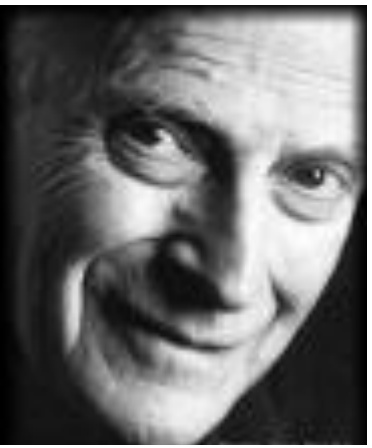
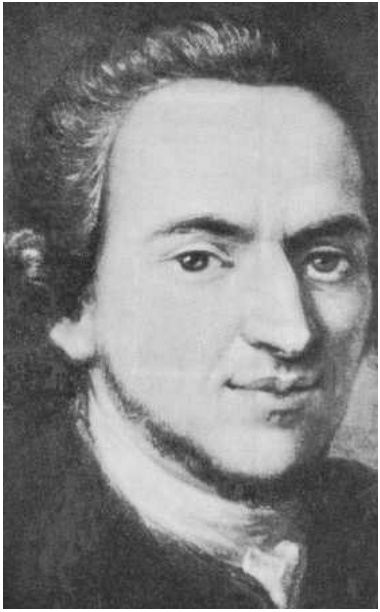
Box accompanying the article: six portraits accompanied by a biographical note.