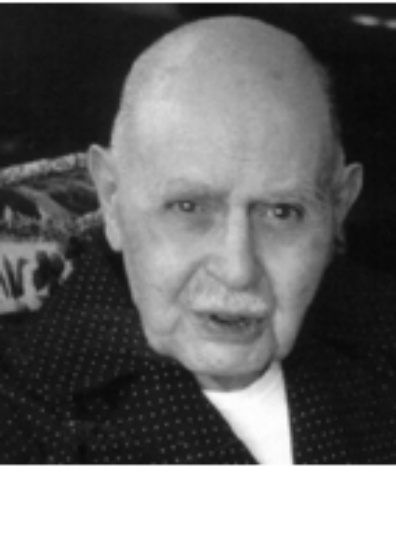
Albert Cohen was born in 1895, in Corfu, the Mediterranean island for which he would keep a lasting nostalgia and to which he would attach the cycle of the Valeureux (The Valiant). He was five years old when his parents arrived in France, in Marseille. After studying law in Geneva, he carried on, side by side, a career as an international civil servant at the United Nations and a career as a writer, crowned in 1968, with Belle du Seigneur (Her Lover), by the Grand Prix of the Académie Française. It is often forgotten that the poet-writer, the Oriental dandy, the father of Solal and of Belle du Seigneur, was also a man within his century, an active militant.
The Jewish militant
Very early, following an encounter with the poet André Spire, Albert Cohen grew passionate about the Zionist project. The creation of a Jewish homeland in Palestine, then the creation of a State for the Jews, appeared as a response to the disillusionment that the Dreyfus Affair represented for the Jewish consciences of the time. As early as 1921, Albert Cohen entered into contact with Chaim Weizmann. He sent him his collection Paroles juives (Jewish Words) along with a first letter that marks the beginning of their collaboration. Within the framework of the Zionist Organization, Albert Cohen was put in charge of public relations. Indeed, one of the objectives of the Revue juive (Jewish Review), of which he was editor-in-chief, was to make Jewish thought and the Zionist cause better known. During the war years, his activities as a Jewish militant took precedence over his activity as a writer. Albert Cohen submitted to Chaim Weizmann the project of a Jewish legion which, according to him, would be capable of mobilizing several hundred thousand European and American Jewish volunteers. In this way the Jews could take part in the struggle alongside the democracies and have a hold on their own destiny. Later this Jewish legion could play a role in Palestine.
In 1939, he is mandated by the Zionist executive to bring this project to fruition, to which he devotes all his energy. He multiplies the legal texts, he establishes political contacts (in particular with the cabinet of Édouard Daladier). Unfortunately, in November 1939, the Quai d’Orsay (the French foreign ministry) issues an unfavorable opinion on the project, which is rejected. With the passing of time, it nonetheless appears that this project was a dazzling historical and political intuition. It well illustrates the extraordinary mixture of realism and creative imagination that characterizes the man. And as Jean Blot writes, one finds oneself dreaming of what might have been changed in the Jewish destiny, had it been able to take concrete form. In June 1940, with his wife and his daughter, Albert Cohen leaves occupied France and reaches London. The Jewish Agency then charges him with a mission of liaison and representation with the various governments-in-exile. He makes contact with the headquarters of the Free French Forces, and as early as August 9, 1940, General de Gaulle receives him. The interview has the value of a recognition, by the Zionist executive and the Jewish organizations, of the legitimacy of the French government-in-exile. In the course of this conversation, General de Gaulle declares twice that he is ready to lend his support concerning the question of the Jewish Homeland in Palestine, if he finds himself, after the war, in a position to do so. Such would be the case. In 1950, after the creation of the State, Albert Cohen is approached to become ambassador of Israel to France. After a moment of strong hesitation, he gives it up in order to devote himself to his work, but he would still militate in the service of persecuted Judaism. He is present, as early as 1969, in Paris and then in Brussels, at the Conference on the situation of the Jews in the Soviet Union.
In defense of the stateless
There is one struggle that mobilizes all the forces of the jurist, of the man, and of the writer, and one achievement of which he would remain very proud. It is, for him, a matter of defending the flouted dignity of the stateless person and of giving to the refugee, in a situation of total precariousness, the guarantees of international law. In 1944, Albert Cohen was appointed legal adviser to the Intergovernmental Committee for Refugees, which sits in London. From 1947 to 1949, he would be division director in the International Refugee Organization, which sits in Geneva. In this framework, he is the author of the international agreement which, in 1946, creates a travel document for stateless refugees and constitutes a notable improvement on the Nansen passport, which had been created in 1922 in the face of the movement of refugees that followed the Russian revolution and the Armenian genocide. As he puts it, this document is no longer a wretched sheet of paper, quickly crumpled and forever scorned by the customs officers, but a true passport of an almost luxurious appearance. It includes a return clause that allows the stateless to be able to come back to the country from which they departed. Albert Cohen, who described in his novels many a refugee without legal defense, would say, with sobriety, that it is his finest book.