
Why have the Jews of the Diaspora always traveled? From the very beginnings of the Hebrew state in Canaan, and even before the destruction of the First Temple, there were numerous Hebrews living outside that State. And after the Babylonian exile, their number in the diaspora regularly exceeded that of the Jews gathered in the Promised Land. A vagabond and adventurous people before becoming a people in wandering, they did not wait for the Christian myth of the Wandering Jew in order to scatter and to travel.
The Dispersion clearly favored these inclinations. In the early Middle Ages, the Jewish merchant-adventurers, the Radhanites (“those who know the roads”), set out from France, from Spain, from Aachen or from Regensburg to reach the Far East and China, both by land and by sea. They spoke Arabic, Farsi, Greek, Old Church Slavonic; they formed powerful caravans and fitted out ocean-going ships. Along their routes they found Jewish communities with whom they shared a common language — Hebrew — and from whom they could hope for aid and solidarity. They traded in everything, established relay-trading posts along their itineraries, brought to the East slaves, eunuchs, weapons, and furs that they bartered for silks and spices. Incidentally (?), they conveyed culture. Thus, through their intermediary, books of astronomy passed from Ceylon to Baghdad at the beginning of the ninth century; and thus it was one of these Jewish travelers, Aben Scheara, who is said to have brought from India to the West the so-called “Arabic” numerals. In a certain way, they resembled — though less bellicose — those Viking merchants who, some time later, set about scouring the seas, devoting themselves first to commerce, then to pillage and conquest.
But commerce was not the only motive for the travels of the Jews. The dispersion condemned them to become, wherever they resided, a minority, always exposed to the vagaries of the surrounding majority’s goodwill. Hence an active desire to gather information about the existence and the fate of the other Jewish communities in the world, if only to find, in case of danger, a place of refuge. (It was thus that, at the time of the massacres in the Rhineland by the Crusaders on their way to the Holy Places, the persecuted Jews set off toward the East, toward Poland, and it was thus that, at the time of the expulsion from Spain, they found welcome among the Ottomans.)
Another reason for sending out emissaries in search of other Jews stemmed from more abstract motives. The search for the “ten lost tribes” long motivated the expeditions of these explorers. It should be recalled that, in the middle of the ninth century, the appearance of a man come from the African shores of the Red Sea provoked great emotion, successively, among the Jews of Cairo, of Kairouan, and then of Spain. He was named “Eldad the Danite” and claimed to belong to the tribe of Dan, one of the ten that had vanished since the destruction of the State of Israel. What is more, he maintained that the tribes of Naphtali, of Gad, and of Asher still existed and lived in a region of Africa near his own. According to his account, all these Jews preserved their independence. He even recounted that these proud and independent descendants of the “lost tribes” took pity on the poor Jews descended from Judah and Benjamin who, for their part, remained in Europe or in Asia under the domination of the Gentiles! The dream of reuniting the whole of the ancient people in all its strength seemed to be taking shape… The echo of this emotion still persisted a century later, notably in the letter that the Jewish vizier of the Caliph of Cordoba, Hasdai ibn Shaprut, sent to the King of the Khazars, and which explicitly mentions Eldad the Danite and his revelations. The Jews believed at that time that to find again and to regather the lost tribes was necessary for the coming of the Messiah and for the rebirth of Jewish liberty and glory.
The Life and Travels of Benjamin of Tudela
The desire to free themselves, to reunite once more the dispersed Jews under the leadership of a descendant of King David, led the great communities — or sometimes powerful individuals (such as, precisely, Hasdai was) — to send out emissaries, either toward known communities or in search of new Jewish settlements. The accounts of the travels of several emissaries have come down to us, such as Rabbi Petachiah of Regensburg, Rabbi Jacob ben Nathaniel ha-Cohen, Rabbi Samuel ben Samson, Isaac ben Joseph ibn Chelo, and many others, all through the Middle Ages. But the most famous, the one whose accounts covered nearly the entirety of the then-known world, is Benjamin of Tudela, who traveled across Europe, Africa, and Asia in the twelfth century.
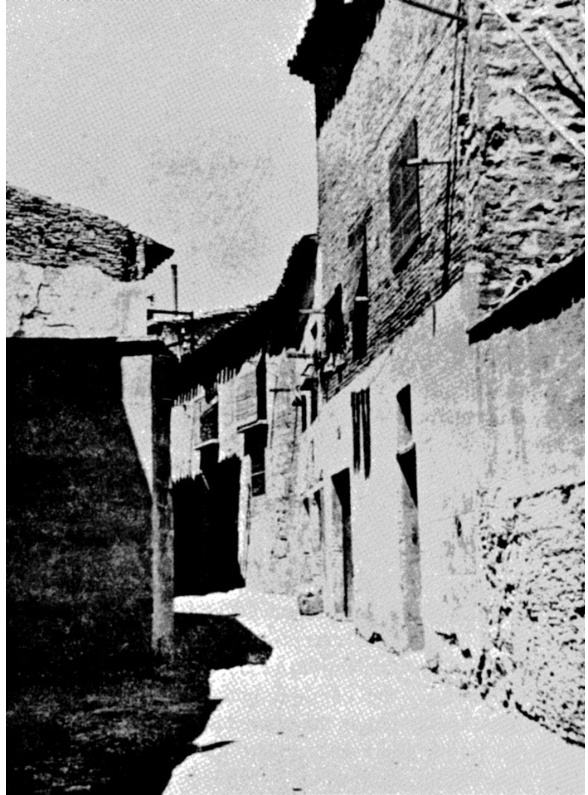
Tudela (Tudela) is a small town of Navarre, on the banks of the Ebro. It seems to have been the first Jewish settlement in Navarre, and it is the homeland of the great poet Yehuda Halevi. During the Reconquista, in 1115, King Alfonso I of Aragon took the town from the Saracens. He granted the local Arabs and Jews permission to remain, along with certain privileges — more generous, moreover, toward the Jews. Their community prospered and developed in the decades that followed. In truth, the town has remained in history only as the homeland of the most famous of the medieval Jewish travelers, Benjamin ben Jonah, called of Tudela, whose activity unfolds some fifty years after the Christian reconquest. At that period the Jews constituted a link of continuity, of cultural unity, within the complex mesh of the expanding Christian kingdoms and the provinces of the Caliphate; they advised the powers in both parts of the peninsula (they were notably tax collectors for the one side and the other, but it also happened that they were military leaders — at least on the Muslim side), and they ensured the safeguarding of cultural achievements. This unique role developed over some two centuries, until the exacerbation of Christian intolerance toward the other monotheisms.
We know nothing of Benjamin’s family nor of himself, except through his “Book of Travels” (Sefer ha-Massa’ot). He journeyed during a period at once of relative stability and of disquiet. Northern Europe was the preserve of stable Christian kingdoms; the independent Christian enclaves in Palestine and Syria had not yet been submerged by Islam. As for the disquiet, we shall speak of it shortly. It is not precisely known when his peregrinations began; it is certain only that he returned to Spain in 1172 or 73, after a journey of probably fourteen years. The book as it has come down to us is most certainly a summary of more generous notes taken during his travels, gathered and edited upon his return. It is composed in medieval Hebrew, called rabbinic Hebrew, with turns of phrase that suggest the author knew Arabic well — which may even have been his mother tongue. Everything leads one to believe that he was still steeped in the cultural tradition inherited from Al-Andalus, Muslim Spain. His observations allow one to conclude that he was also acquainted with the Talmudic teachings and could detect and describe the local deviations from orthodox practices and beliefs; his observations on the Jewish sects — such as the Karaites of Constantinople, the Samaritans of Palestine, or again a sect, today vanished, in Cyprus — prove as much. He was not uninterested in the other religions, and described just as readily the dissensions among Christians or Muslims. But he was probably more a merchant than a scholar, and his travels, though he does not mention it, may also have had practical aims. In his introduction he says that he reports “what he has seen and what he has heard from trustworthy persons”; the line between the two is not altogether limpid. In particular, what he says of China and the Indies probably belongs to the second category (let us note, however, that he is the first Westerner to call China by its name); on the other hand, the precision of his descriptions of the cities of Europe, Africa, and the Middle East — as far as Persia and beyond — attests to his actual presence in these places.
His text had, in its time and in the following decades, a great resonance both among Jews and among Christians. The oldest version of the text to have reached us was published in Constantinople in the middle of the sixteenth century, but other editions had certainly preceded it, given the popularity of this account from the end of the twelfth century onward. The first known French version was published in Amsterdam in 1734. It is a mediocre translation from the Latin, and not from the Hebrew original (let us note that the most recent version was published in 1945 in… Baghdad, by H. Haddad).
Why did Benjamin of Tudela set off? No one knows. But one may imagine that the Jews of Tudela and of the rest of the Iberian Peninsula had grown anxious. The intolerance of the Berber caliphal dynasty of Cordoba toward the Jews, on the one hand, and the massacres perpetrated by the Crusaders in the Rhineland and all along the roads that led them toward Jerusalem, on the other, shook the sense of security of the Spanish Jews, who began to seek out more serene skies. This could have motivated an exploration such as Benjamin’s, who everywhere noted the Jewish traces and recorded the living conditions of the communities, their strength, their independence, and their security. His book may also have had a consoling and reassuring role, inasmuch as it does not fail to detail certain powerful communities, notably in Mesopotamia, in Persia, or in Africa, some of which enjoyed great autonomy, indeed independence, and made themselves feared by their neighbors.
As for his account itself, here is its beginning, a kind of introduction composed by the editor:
This is the Book of Travels compiled by Rabbi Benjamin1, the son of Jonah, of the land of Navarre. May he rest in Paradise! The said Rabbi Benjamin set out from Tudela, the town of his origins, and crossed many distant lands as is reported in his book. In each place where he was, he noted down all that he saw or heard from trustworthy persons — things of which one had not yet heard in the land of Sepharad. He also mentions some of the wise and illustrious men who reside in each of these places. He brought this book back with him on his return to the land of Castile, in the year 4933 (that is, 1173 of our era). The said Rabbi Benjamin is a wise and intelligent man, learned in the Law and the Halakha, and each time we have tested his assertions, we have found them exact, truthful, and consistent, for he is a trustworthy man.
As for Benjamin’s text proper, it begins thus:
I journeyed first from my native town toward the city of Saragossa, and then by the river Ebro as far as Tortosa. From there I made a journey of two days as far as the ancient city of Tarragona, with its Greek and Cyclopean buildings. One finds none like them in all the land of Sepharad. It is situated by the sea, and two days’ journey from the city of Barcelona, where one finds a holy community with wise, learned, and illustrious men such as R. Shesheth, etc.
One follows Benjamin all along his roads with keen interest. He visits Provence, Italy and Rome, Greece and Constantinople; he travels by land across Syria and Lebanon. He lingers at length in the region that was visibly one of the goals of his journey: the Holy Land, recently “ethnically cleansed” by the Crusaders. Indeed, he no longer meets many Jews there: barely two hundred in Jerusalem itself, as many at Caesarea or at Acre. He visits a further three hundred Jews at Ramleh, two hundred at Ashkelon, but only two Jewish dyers at Bethlehem and a single one at Jaffa… Alongside these “orthodox” Jews, he notes the presence of numerous Samaritans, whose customs he describes, and that of the Karaites, who reject the Talmud and who cohabit everywhere with the “rabbinic” Jews.
By contrast, on leaving Palestine toward the East, he finds an infinitely better situation on the Muslim side. At Damascus he describes an organized community of three thousand Jews, then finds seven thousand at Mosul, and forty thousand “who enjoy security, prosperity, and honors” at Baghdad, the capital on which Benjamin dwells at length. Throughout the Caliphate of Baghdad the Jews are numerous and prosperous, and Benjamin takes the time to describe their customs and their autonomy under the Nasi, the exilarch descended from King David. He visits the great academy of Sura, but not that of Pumbedita, and praises the learning of the rabbis who study there, and of the gaon who directs it.
He then expands on what he finds in the Arabian Peninsula, and above all in Yemen: there the Jews are powerful and independent, they possess fortified towns; the town of Tilmas numbers a hundred thousand inhabitants, the region of Tanai numbers three hundred thousand. These Jews live at peace with their Arab neighbors and ally themselves with them to go and pillage, on the other side of the Red Sea, the African coasts…
Our traveler ascends from there toward Persia, finds in the capital, Isfahan, 15,000 prosperous Jews, then 10,000 at Shiraz, and even 80,000 at Ghazna. He pushes further, as far as Samarkand, where fifty thousand Jews live. Once again, he meets (or hears spoken of, from a “reliable source”) independent Jews, who live beyond the river Gozan (which certain authors believe to be the Ganges?), in friendship with the surrounding Turkic tribes. He then seems to descend toward the Indian coast and as far as the region of Malabar, dwelling as much on the spices found there as on the black Jews — black like their non-Jewish neighbors. He then explains that the island of Ceylon is twenty-three days by sea from this coast, but it is probable that he speaks of it only from hearsay. He nonetheless reports that there are three thousand Jews in Ceylon. He further writes that one must then travel for forty days to reach China, and that is all he says of it, except that this land is the eastern extremity of the world. Visibly, he did not himself reach this region. But he is the first chronicler to call China by its name. And he writes that beyond it stretches the sea of Nikpa, a dangerous sea…
It is apparently another journey that leads him into Africa, and first into Nubia. He then descends the Nile, from Aswan toward Helwan, where he finds a Jewish community of three hundred souls. There too he hears accounts, which he transcribes, concerning the caravans that cross the Sahara in fifty days by camel toward black Africa, to conduct a trade in copper, salt, precious stones, and gold. He continues his journey toward Fayoum and its two hundred Jews before visiting Cairo, where he finds seven thousand Jews and two vast synagogues. Then he heads toward the Nile delta, crosses the land of Goshen — that where, in the time of the pharaohs, the Hebrews had lived and labored as slaves — and describes the ruins of the cities built by the latter for Ramesses II. He encounters yet more Jews in all the settlements of the region. Finally, he counts three thousand at Alexandria, a city that detains him for a long while.
From there he returns to Europe by sea, toward Messina first (two hundred Jews), then heads toward Palermo, where he finds Christians, Muslims, and Jews (fifteen hundred) living in good understanding. Sicily greatly pleases our traveler, who finds there “all the agreeable things of our world.” Benjamin does not expand much upon his journey up the Boot toward the North, having described, during an earlier journey, the Italian cities and their complex rivalries. After crossing the Alps at Saint-Jean-de-Maurienne, he arrives in twenty days at Verdun, “where Germany begins.” The Rhineland is the essential of Germany for Benjamin, who finds yet more congregations — though sorely tried by the recent massacres — at Metz, at Trier, at Coblenz, at Andernach, at Bonn, at Cologne, at Bingen, at Münster, and at Worms. He then speaks of Prague, which is at the beginning of the Slavic lands, mentions Kiev and Russia, land of the cold, of frozen noses, and of furs. And to conclude his journey, he speaks of Northern France:
The kingdom of France, which is Tsarfat, extends from Auxerre to Paris, the great city, which is six days’ journey away. The city belongs to King Louis. It is situated on the river Seine. There are students there who have no equals in the world, who study the Law night and day. They are charitable and hospitable toward all travelers, and are as brothers to all their Jewish brethren. May our God, the Blessed One, have pity on us and on them!
The Travels of Benjamin II
The “Book of Travels” gave rise to many another vocation. Between the twelfth and the seventeenth century, Jewish travelers ceaselessly roamed the world in search of their coreligionists. To describe them all would be tedious and encyclopedic, but one must mention an astonishing nineteenth-century traveler, Israel Joseph Benjamin (1818–1864). A Romanian Jew from the small Moldavian town of Fălticeni (Faltischan), he baptized himself “Benjamin II,” in direct filiation with his distant precursor. He writes in his preface:
…Very few Israelites have preceded me along this path so difficult, and yet so necessary, so glorious! Since the time of the explorations of the venerable and learned Rabbi Benjamin of Toledo (sic), no one has occupied himself entirely with a subject so lofty. This silence of several centuries, this immense lacuna — and I dare affirm it, inexplicable — will begin to be examined. We shall add, if God continues to sustain our feeble forces, a few stones to this expiatory monument, which rises in the midst of the ruins that surround us.
One immediately perceives the tone, so typical of its era, and the ambitions of the young explorer. At twenty-five, having failed in a timber-trading enterprise, he yielded to the desire to walk in the footsteps of Benjamin of Tudela. In 1845 he thus set off in his turn in search of the ten lost Tribes. His travels led him first to Egypt, then toward Asia by way of Palestine, Syria, Armenia, Kurdistan, Iraq, Persia, the Indies, and as far as China. He came back by way of Afghanistan and, six years after his departure, found himself in Vienna. From there he set off again toward North Africa by way of Italy. He thus criss-crossed Libya, Tunisia, Algeria, and Morocco. In each locality he passed through, he gathered information on the number of local Jews, their living conditions, their customs and rites, their folklore. He was not a scientist by training, but his direct and scrupulous approach earned him the esteem of scholars such as A. von Humboldt. His abundant and picturesque account vividly sets before us the dangers and difficulties of such journeys in the middle of the nineteenth century: he had to know how to ride on horseback and on camel, to swim, to disguise himself, to shoot, to flee, to pass himself off as a physician in order to save his life, to endure shipwrecks… The caravans of which he was a part, both in Persia and in Kurdistan, are ceaselessly attacked by brigands, and these are no minor skirmishes. Thus, in that last region, he is part of a caravan of twelve hundred armed travelers — a whole regiment on the march — which is no less harried and assailed every day, suffering daily losses, and which ends up being overwhelmed, before the end of its journey, by a superior number of bandits. It is worth noting that at most of his stages he finds at his side other “Israelites” (this is how he calls them), intrepid travelers like himself. His experience is described in the book he publishes in French on his return, in 1856, in Paris with Michel Lévy Frères, under the title Cinq années de voyage en Orient (1846–1851), par Israël-Joseph Benjamin II, voyageur et auteur (Five Years of Travel in the East (1846–1851), by Israël-Joseph Benjamin II, Traveler and Author). The style is florid and full of imagery; it has nothing of scientific dryness. The author addresses his reader, tries to make him share his emotions and his convictions.
Thus, after describing in abundance the various towns of Palestine that he visited, Benjamin II concludes this visit with a chapter entitled “A Glance at the Situation of the Israelites in Palestine,” in which he expresses his desolation before the profound misery, the continual oppression from which the Jews of the land suffer. The chapter ends with a quotation from Isaiah: I call upon the Lord, the Most High, that He may put an end to my anguish. He sends me my help from on high, and His succor against my oppressors… This quotation indicates the tone in which the work is composed.
The living conditions and the distribution of the Jews in the middle of the nineteenth century are more familiar to us than the situation in the times of Benjamin of Tudela, so it is not indispensable to report all that Benjamin II found in the various regions he traversed. But his book makes for interesting reading, and one should not hesitate to seek it out in the libraries!
Some of Benjamin II’s information, however, deserves to be pointed out, particularly in comparison with that of his illustrious predecessor. Needless to say, the situation had strongly evolved between 1150 and 1850! Thus, at Mosul he finds no more than a hundred and fifty Jewish families, who, moreover, lived quite well. He crosses Kurdistan and inquires into the origins of the Kurdish Jews: they claim to descend from the Hebrews exiled after the destruction of the First Temple; in this way they would be the descendants of the lost tribes. Their state of knowledge of Judaism is mediocre, and their living conditions inspire much commiseration in our traveler. He found, moreover, in this region, Nestorian Christians who likewise believe themselves the descendants of the same Jews, but converted to Nestorianism at the moment when that heresy spread through the region.
Benjamin II finds at Baghdad some two thousand Jewish families — far fewer, then, than in the times of Benjamin of Tudela, but in an enviable state of prosperity. At Basra he cites a community that, from three thousand prosperous families, had suddenly fallen, twenty years earlier, to barely fifty, as a result of a violent and mysterious epidemic.
Benjamin II spent long months in the Indies, studying the communities that claim to be Jewish. He expounds at length the reasons for considering the Bene Israel as Jews, both those of Bombay and those of the Malabar coast. He sought out the origins of the black Jews of Cochin and cites several interesting hypotheses. It is in these chapters devoted to the exotic communities that Benjamin II’s account holds the most interest for the modern reader; one could not vouch for the correctness of his conclusions, but at the least one cannot reproach him with a superficial approach to his subject: he spared neither his time nor his pains during his long sojourns in a difficult environment.
Benjamin II then embarked at Calcutta for China, an expedition from which he expected much. After a stopover at Singapore, he reached Canton. But he fell ill upon his arrival and, after twenty days in bed with a high fever, decided to return to Bombay, where he was indeed able to be treated and to recover. To compensate in part for his failure in the exploration of that land, he included in his book several accounts by other travelers and missionaries, notably concerning the Jews of Kaifeng (Kaïpheng) — accounts that already signal the decadence of this ancient community, which is said to have established itself in China 1850 years earlier, but which for some forty years had no longer been in a state to maintain a rabbi and was little by little abandoning the religion of its ancestors. The author also added, in the body of his book, accounts by other travelers concerning Afghanistan and Bukhara, regions where he had been unable to go himself and whose interest seemed to him evident (Benjamin notably takes up the tradition according to which the Afghans would be of Jewish descent). By such inclusions of others’ accounts, he follows the example of his model. But he takes up again the direct account of his own journey when he leaves India to sail toward Muscat and then toward Persia; a journey studded with shipwrecks, attacks by brigands, and other incidents, by turns dramatic and amusing. At last, having reached Shiraz, our traveler finds there Jews oppressed and forced to embrace Shiism: of the some three thousand Jewish families of the city, two thousand five hundred had become Marranos — officially Muslims but secretly practicing Mosaism. What a difference from the time of Benjamin I! After a most perilous journey, our traveler reached Isfahan, with its four hundred Jewish families and its three synagogues. Everywhere in Persia, Benjamin signals the state of great oppression suffered by the local Jews. In the new capital, Tehran, he counted five hundred Jewish families, and found their lot a little better, thanks to the proximity of the central power. A whole chapter is devoted to the mores and customs of these Jews of Persia, of whom the author does not doubt that they are the descendants of the lost Tribes. The author reports that the persecution of the Jews of Persia by the Shiites results from the latter’s belief that it was a Jew who had killed their venerated prophet Ali.
If our Benjamin II succeeded in his travels — inasmuch as he left us a captivating book in two volumes, and inasmuch as his work as an amateur ethnologist presents a real interest — his commercial enterprises did not enjoy the same success; he tried on several occasions to establish himself in a commercial activity, notably between his native Moldavia and Istanbul, but suffered failure each time, despite his entrepreneurial sense and his experience as a traveler. He died in London at the age of forty-four, in profound misery.
Benjamin III, a Jest by Mendele Moykher Sforim
The “father of Yiddish literature,” the adept of the Haskole (Jewish Enlightenment) and the propagator of the book, which in his eyes was a tool of education and of struggle, lived in nineteenth-century Russia at a time when the Jews moved about a great deal. The great migration toward the United States in particular had set whole villages in motion. To tell the truth, the Jews of the tsarist “Pale of Settlement” had always traveled a great deal; these were, however, less ambitious peregrinations: the wretched Jewish peddlers roamed the countryside in order to return home on the eve of the Sabbath, in the hope of earning the meager subsistence of their families.
Mendele Moykher Sforim drew inspiration from the travels of the two Benjamins we have just evoked in order to write a comic satire of the little Jewish world of the shtetl. His village is called Tuneyadevka, which in Russian means “village of idlers, of loafers.” The tone is set. Its inhabitants are poor, wretched, but joyful. And they read, as befits the people of the Book.
In this village dwells a poor Jew, Benjamin, husband of a certain Zelda and father of a numerous progeny. They live from day to day, in poverty and in joy. But one day, our Benjamin happens upon the account of the travels of Benjamin of Tudela… And suddenly this man, whose universe had until then been confined to the limits of his village, resolves to set off, himself too, in search of the Ten lost tribes, despite his timorous character. He finds himself a traveling companion: Sender, the village simpleton, for the road will be less frightening for two.
It would be a sacrilege to attempt a summary of this picaresque tale of the peregrinations of our two Jews, who will certainly not go very far, but who will make the reader laugh with tenderness all through the some two hundred pages of a book that Arnold Mandel translated from the Yiddish and that “Austral” published in 1995.
A dear friend of mine, Henri Raczymow, one day conceived the project of publishing a volume that would gather together the accounts of the travels of the three Benjamins. On reflection, however, the link between the three seemed to him a little thin and, to be frank, artificial, and the project was abandoned. Not entirely, however: this article is the result. May it incite the reader to turn, one after another, toward the three sources of knowledge and of pleasure that it evokes!
Notes
The term rabbi here is a mark of esteem and does not signify that its bearer was a rabbi. ↩︎