Our relationship with Europe is fundamentally an ambivalent one.
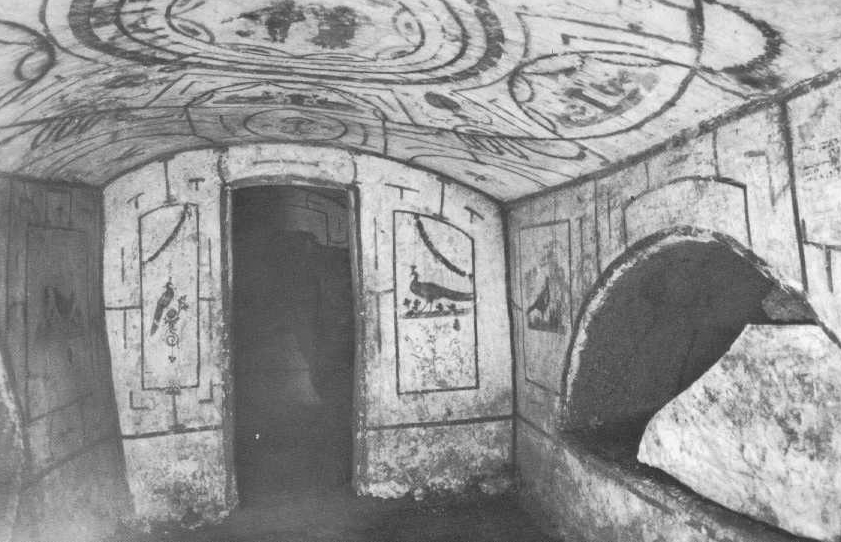
We are among the oldest inhabitants of Europe: in France, the earliest traces of a Jewish presence date to the year 6 CE, when Archelaus, the ethnarch of Judea, was exiled by the Emperor Augustus to Vienne (Isère), where he died in the year 16 CE.
The same is true of Germany, where the first Jews arrived with the Roman legions.
In the history of Europe, Jews often played the role of go-betweens: conveyers of merchandise, but also of ideas — between the Greek world and Christendom, between Christendom and the Muslim world, between the various regions of Europe. Conveyers of goods, peddlers, philosophers, rabbis, cosmopolitans, stateless people, revolutionaries, inventors of novelties, agents of unrest and change — from the modernization of trade and industry in Germany or France to the founding of revolutionary parties in Eastern Europe. Figures of transmission, multiform and shifting, for the go-betweens are not always the same; and sometimes the one is the child of the other. The yeshiva, as is well known, could lead some toward the rabbinate and others toward revolution.
By their dispersion, their diversity, their cosmopolitanism, and their many contacts, Jews have thus been, over the course of history and in a certain sense, the first Europeans.
Marranos ancient or modern — in a broad sense of the word — we were the first postmodern citizens to share multiple identities, to lay claim to a heritage at once common and plural.
Of their inscription in Europe they hold a mingled memory, often a painful one: where some drove them from their lands — already making of their country, as Philip the Fair did of France, a Judenrein land — other European countries took them in, only to drive them out, later, in their turn.
The Spanish Golden Age had seen Jewish culture flourish under Umayyad rule, with Jews distinguishing themselves in the sciences, in medicine, in economics, in politics, in permanent and fruitful contact with the Arabs, the new masters of Spain after the defeat of the Visigothic kingdom. But the Reconquista closed off, for the Jews, that period of stability and openness, and plunged them once more into wandering, misery, and instability — the condition they had long endured in Christian lands since the destruction of the Second Temple. This process of persecution would soon culminate in the Inquisition and its pyres, in the expulsion of the Jews from Spain and Portugal, and in the introduction, four hundred years before Nazism, of the obsession with limpieza de sangre, purity of blood.
After these centuries of suffering, of exclusion, of repeated expulsions, of forced migrations, of massacres of which the Crusades are but one example, the transformations of European society — notably with the French Revolution — at last brought the Jews of Europe, through Emancipation, the hope that, having become citizens of their countries of residence, they might finally lead a peaceful life, free of threats. To be sure, this Emancipation did not proceed at the same pace everywhere in Europe.
In Eastern Europe their own society had felt its consequences: changes in occupations, access to a secular schooling, the attempt to modernize their religion with the birth of Reform Judaism, the secularization of their culture with the appearance of the Haskalah and of a secular literature. An awakening to political action through the birth of numerous political movements (the Bund, Zionist movements, internationalist revolutionary movements, communist or socialist), and in Central and Western Europe, Jews swiftly became stakeholders in the life of their societies: economic life, political life, cultural life. The trajectories of financiers like the Rothschilds or the Pereire brothers, of political figures like Adolphe Crémieux, of artists, writers, or scholars such as Mendelssohn, Heine, Proust, the Reinach brothers, bear witness to this.
Although there still remained, in the nineteenth century, countries — such as the Russian Empire — where Jews were subjected to all manner of restrictions, vexations and exactions, of pogroms, they had nonetheless entered modernity. If the horizon darkened in France on account of the Dreyfus Affair, the Jews remained no less fervent partisans of the Enlightenment and of the French Revolution.
Europe was thus for them, and for a time, a Europe of welcome and of hope, a Europe in which one could imagine the overcoming of the very nationalisms from which they had suffered so much.
Unfortunately, the end of the nineteenth century, with the rise of nationalisms, saw the growth of antisemitism and racism, which would develop and culminate in the twentieth century in the Shoah.
The Shoah makes of Europe’s Jewish memory a wounded memory. An attempt at the extermination of the Jews, which murdered more than half of Europe’s Jewish population and all but made the language and culture of the Yiddishland disappear, it sounds the death knell of a certain number of certainties and illusions. It calls into question the certainties concerning the Enlightenment, Reason, human rights, and tolerance. For it remains to be understood, even today, how the populations of European countries, democracies for decades or more, once that democracy had been abolished by the Nazi occupier, let a part of their citizens — the Jews — be excluded, then murdered, even if the Jews were not the only victims of that war: but their massacre remains unequalled in its scale, in its cruelty, and in the systematic character of its organization and its execution.
If they understood that their emancipation and their integration remained fragile, it is nonetheless the case that, fifty years after the genocide, the Jews are experiencing a rebirth in Europe: they are integrated citizens, in their countries and among the populations in whose midst they live, citizens active in every field. Their presence as Jews, despite lingering traces — and at times waves — of antisemitism, is accepted, visible, recognized. Jewish culture is present, finds its place within the national cultures of the great European countries. And one witnesses a remarkable rebirth of that culture in the European countries emerging from communism — sometimes, paradoxically, in the near-total absence of Jews.
So we too may dream of a European future, a more peaceful future for the peoples, the nations, and their components, with their diversities, within a democratic Europe that has overcome narrow nationalisms and their tyrannies. Perhaps this is only one of those utopias of which we, all Europeans together, were both witnesses and actors in the twentieth century. Utopias that ended in tragedies and massacres. For the gains of civilization are to be defended, and nothing is ever definitively secured: the wars of the former Yugoslavia, their massacres, their ethnic cleansings have reminded us of this, as has the difficult situation of minorities in certain countries of the former communist sphere.
Even as the construction of Europe advances and its enlargement comes into view, one witnesses, indeed, a resurgence of ethnic or ethno-religious conflicts that we naively thought belonged to the past, an exacerbation of nationalism and of xenophobic tendencies, and of antisemitism, which often go hand in hand, and finally attempts to rewrite the history of the Nazi period.
Democracies are fragile, confronted with fanaticisms and other fundamentalisms: the attack on the World Trade Center showed us this.
Europe is today, for the Jews, the third most important gathering place in numerical terms, after the USA and Israel, where the persistence of the conflict with the Palestinians concerns them in the first degree.
The Europe now under construction is also a place of questioning about the future of the Jews in the democratic societies where the majority of them now live, as indeed for non-Jews. A place where the identity of all parties is being worked out.